
Innovative Paving Block Inventor Passes
Michael Glickman, British architect and inventor, passed away on May 1st who developed concrete paver shapes and segmental retaining wall designs. He influenced the nascent concrete paver industry as a member of ICPI’s predecessor, the Concrete Paver Institute (CPI) in the U.S. during the early-1990s through London-based McCauley Corporation Ltd. Michael attended CPI meetings in the U.S. always providing positive words about the potential of the industry here. He articulated the notion of pattern-to-shape ratio which varies with each paver shape or combination of shapes. For example, a rectangular unit is capable of creating four patterns from a single paving unit i.e., stack bond, running bond, 45º and 90º herringbone. The addition of half pavers into the mix obviously increases that ratio. A higher ratio potentially adds wider design options and greater value. Along these lines, he invented V-block, a single shape that could be placed in as many as 20 patterns. Other inventions included a segmental retaining wall unit called Porcupine with a gear-like bottom and top faces that locked each course directly on top of each other or enabled pitching back slightly to create a batter or rising wall angle against the earth. These inventions are noted in a 1996 Concrete Plant and Precasting Technology magazine here. He also explored a paver shape dubbed G-Block who angled sides increased vertical interlock.
Prior to developing unit paver and wall designs, Michael worked as an architect in London for Charles Eames, a prolific designer of furniture, buildings and motion picture making. Besides his paver and wall inventions, Michael received international media recognition for documenting crop circles, distinct large-scale, artistic patterns made in agricultural fields across England. Among his four books on the subject, he took a certain delight in offering no definitive explanation for these huge playful patterns that went well beyond the design capacity and execution discipline of clever pranksters. The variation and order of the designs were of great interest to him that likely pointed to supernatural sources. His work in this area is found here.

ICPI – NCMA Collaboration Exploration Committee Meets
The ICPI – NCMA Collaboration Exploration Committee had their first conference call meeting on June 10, 2020. The charge of the committee is to explore additional collaboration to better position members to increase market share and review possible areas of consolidation. The committee was updated on the process and project timeline. The facilitator/consultant Paul Meyer, Tecker International, has extensive experience with these type projects and reviewed the process with the committee. The next step will be for Tecker International to make over 30 telephone interviews of members representing many stakeholder groups.
The Collaboration Exploration Project Plan
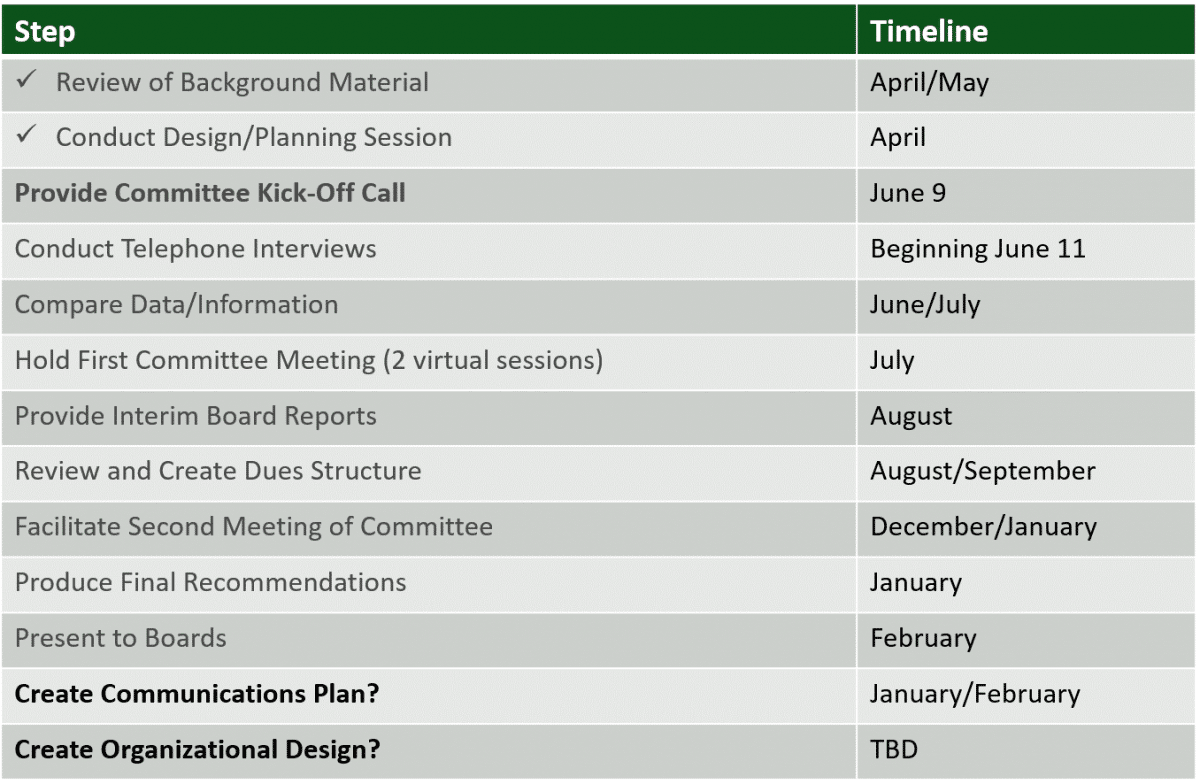
The ICPI Co-Chair of the committee is Dave Carter from Oaks Concrete Products. If you have any questions about the process please contact Charles McGrath, ICPI Executive Director 703-657-6885.
Advocacy Update: H2B, Infrastructure, Appropriations and WRDA
Lobbying will see dramatic changes as a result of the COVID-19 pandemic.
Action has been taken on Capitol Hill to replace, or at least vastly restrict, in-person contact with potentially virus-laden visitors. The buildings are nearly completely closed to outsiders. Traditional Capitol Hill hand-shaking, face-to-face life has always made the Hill a national hub for receiving and spreading infectious diseases throughout the country. This unfortunate fact has been tolerable.
Until now.
It appears likely that COVID-19 will be the catalyst to amend congressional rules to allow remote operations for most congressional functions. If new rules and procedures can be worked out, Members of Congress and key staff will not only receive many fewer visitors, they will likely accelerate the trend to spend fewer days in DC. Already in COVID-19, we see the advent of remote hearings.
Lobbying is not going away because of COVID-19. It is necessary to run the country. But it will change. As with other consequences of the pandemic, we expect many of the changes to become permanent, and not only for health reasons.
There is an awakening. There are tremendous working-at-home advantages being discovered by the traditional business economy and workforce. They apply similarly to remote advocacy. The cost savings, travel savings, time-cost savings and logistics savings in remote advocacy are real and too great to be ignored.
Remote advocacy is fully feasible as long as all parties go along with it (they may have no choice) and the technology works. Both conditions seem to be the case. For those who are comfortable with it and can master it, remote advocacy is already the way to do business, perhaps the preferred way when the savings are factored in.
This is a moment of epochal change, the kind that will be featured in political science text books. Virtual/remote lobbying seems both the present and the future of advocacy.
On to the issues.
Infrastructure
(This topic will serve the dual purpose as an introduction and overview for other topics below, FY21 THUD Appropriations and WRDA.)
The year began with policy-makers in the House, Senate and White House speaking favorably about passing large infrastructure bills in 2020.
The chief opportunities for major construction-related infrastructure bills include reauthorization of the federal highway bill and the Water Resources Development Act (aka WRDA) reauthorization. The current highway bill is set to expire on September 30, and WRDA has established a successful reauthorization tempo of two-year bills which would suggest 2020 enactment of the next bill.
ICPI and its members have strong interests in both bills, and have recommended language on permeable pavements to both the House and Senate Appropriations Committees, the Senate Environment and Public Works Committee, and the House Transportation and Infrastructure Committee. The ICPI-recommended language will appear later in this report.
The advent of the COVID-19 pandemic has presented the new possibility of moving some or all of the highway and WRDA bills as part of the lineage of coronavirus bills intended to jumpstart the economy.
At press time, there is mixed support and some important opposition on Capitol Hill for the inclusion of a major infrastructure package in the next coronavirus bill.
ICPI has adopted the approach of preparing for either case, whether highway and/or WRDA proceed sooner on a COVID-19 bill, or later as free-standing legislation following regular order.
The outcome of the bills moving and how they move may be strongly influenced by unemployment and economic data as it develops in late spring/early summer. The timing and shape of a recovery could determine whether infrastructure will be attached to a COVID-19 bill. ICPI has prepared for either case and is well-positioned to promote permeable pavements.
ICPI sent a joint industry letter to the congressional leaders developing COVID-19 legislation urging the inclusion of infrastructure, and highlighting key issues such as WRDA and permeable pavements. Excerpts appear below:
WATER RESOURCES DEVELOPMENT ACT (WRDA) REAUTHORIZATION AND FUNDING: WRDA and its State Revolving Fund loans for combined sewer overflows reduction are an important aspect in both economic development and in construction to address important environmental issues. We (ICPI) support adding the WRDA Reauthorization, and robust SRF funding, to the construction infrastructure chapter in Coronavirus 4.
And —
STORMWATER MITIGATION WITH PERMEABLE PAVEMENT TECHNOLOGY: we recommend that construction anticipated and funded by Coronavirus 4 encourage the use of permeable pavement technology where feasible to reduce harmful stormwater runoff, reduce local flooding caused by development and to improve water quality. EPA recognizes stormwater runoff as a serious environmental problem, and further recognizes permeable pavement as an EPA-recognized Best Management Practice to address stormwater runoff. Adding stormwater mitigation as a requirement for Coronavirus 4 construction, particularly with mention of permeable pavement technology, can help prevent construction funded by the Coronavirus 4 bill from necessitating stormwater mitigation funding in the future.
In another development as part of its coalition efforts, ICPI cosigned a broad industry letter to the President supporting passage of a major infrastructure bill in 2020, citing the exigent circumstances as well as the need for infrastructure investment.
FY21 THUD Appropriations
While the COVID-19 pandemic has dominated the news cycles, the work of developing the FY21 Appropriations bills, including THUD (Transportation and Housing and Urban Development) has continued. Key Appropriations Committee staff are working from home in many cases, but they are working, and ICPI has been in contact with them.
ICPI has recommended the following recommended report language for the House and Senate Appropriators to consider including in the committee reports to accompany their respective FY21 THUD Appropriation bills:
Permeable pavements.—The Committee encourages the Secretary to accelerate research, demonstration, and deployment of permeable pavements to achieve flood mitigation, pollutant reduction, stormwater runoff reduction, environmental conservation, and resilience for both new road construction and the retrofit of existing roads. The Committee encourages the Secretary to conduct structural evaluations of flood-damaged pavements, with emphasis on local roads and highways subject to flooding and extended periods of inundation, to understand the mechanisms of flood damage and how permeable pavements might be used to prevent or reduce damage from future flooding.
Hill staff have confirmed receipt of the ICPI recommendation. We have received no questions and have heard of no problems at this point. Staff are doing double duty drafting the COVID-19 bills as well as regular order annual appropriations. It is unknowable at the moment when appropriations bills will be ready for public subcommittee work. ICPI is well-positioned to respond to any needs expressed by the Hill.
WRDA Reauthorization
ICPI has sent a detailed message to the Senate Environment and Public Works Committee, and the House Transportation and Infrastructure Committee, supporting passage of a WRDA Reauthorization. Further, ICPI has recommended four amendments to a key discussion draft being used at committee-level by the Senate. Redacted versions of those recommendations appear below:
ICPI Comment regarding the discussion draft of
‘‘America’s Water Infrastructure Act of 2020’’
Summary: ICPI fully supports AWIA 2020, but recommends that “permeable pavements” be included by specific reference in four locations in the Stormwater sections.
…
Permeable Pavements
…
ICPI regards permeable pavements as unequivocally the most effective pavements in reducing CSOs from publicly owned waste treatment works and into MS4s, as well as for enhancing watershed protection and aquifer recharge.
…
Adding specific mention of permeable pavement technology in “AWIA 2020” will provide needed attention and emphasis to help dislodge the planning and project-level entrenchment that inhibits broad-based implementation of permeable pavement technology in the U.S.
With that background: ICPI strongly supports enactment of the discussion draft, especially the elements that address stormwater and stormwater mitigation, either as a free-standing bill or as part of an infrastructure package in COVID-19 legislation.
Further, ICPI recommends the following four amendments to the discussion draft (proposed new language is underlined):
— In Section 2001 of the discussion draft, amending Title II of the Federal Water Pollution Control Act, add a new Section 222 (c) (7): an explanation of how the proposed project is expected to maintain or enhance infiltration of stormwater runoff into soils using permeable pavements and similar paving technologies to avoid adding to stormwater runoff into drainage systems.
— In Section 2001 of the discussion draft, amending Title II of the Federal Water Pollution Control Act, add a new Section 222 (d) (7): an explanation of how the proposed project is expected to maintain or enhance infiltration of stormwater runoff into soils using permeable pavements and similar paving technologies to avoid adding to stormwater runoff into drainage systems.
— In section 2018 (b) (1) (B) (i), amend the text as follows: (i) conduct research on new and emerging stormwater control infrastructure that is relevant to the geographical region in which the center is located, including stormwater and sewer overflow reduction, permeable pavements, other approaches to water resource enhancement, alternative funding approaches, and other environmental, economic, and social benefits;
— In section 2018 (c) (2) (A) (i), amend the text as follows: (i) Planning and designing stormwater control infrastructure projects that incorporate new and emerging, but proven, stormwater control technology, including engineering surveys, landscape and permeable pavement plans, maps, and implementation plans.
H-2B Worker Visas
There has been considerable recent activity affecting the H-2B worker visa issue.
From late February to present, U.S. unemployment surged from record lows to near record highs due to the COVID-19 pandemic and economic shutdown, an unparalleled shift that has completely altered the H-2B debate.
In March, USDOL and USDHS announced that they intended to make available 35,000 supplemental H-2B worker visas for the second half of FY20, and that of these 35,000 visas, 20,000 would be made available for employment start dates beginning April 1, 2020, and 15,000 would be made available for employment start dates beginning May 15, 2020.
In response to this action, ICPI joined other H-2B Coalition (“Coalition”) members in writing USDHS Secretary Wolf to praise the release of additional visas but request more releases to meet market demand at that time. Further, ICPI and the Coalition asked the Secretary to adopt changes to how H-2B visas are processed.
The COVID-19 pandemic has materially changed the nature of the H-2B debate. ICPI and the Coalition are adapting to the new situation.
Click here to read the final H-2B Workforce Coalition letter to President Trump.
WOTUS
USACE and EPA have now taken the final step in replacing, permanently (at least until the next Administration) the definition of the Waters of the U.S. that are subject to regulation under the Clean Water Act.
As expected, the final rule constricts the geographic breadth of “waterways” that are subject to CWA.
Among other things, the new rule defers more decision-making authority to the states. ICPI members may wish to contact their state environmental offices to inquire as to plans in their states.
The rule goes final on June 22, 2020. As a final rule, there is no comment period.
At press time, some states and also farming/ranching concerns have filed lawsuits to stop implementation of this latest WOTUS regulation. It remains to be seen whether and how this legal action might impact the issue, if at all.
PAVERPAC
At press time, all in-person fundraisers have been postponed for the time being. Campaigns are now investigating the possibility of conducting fundraisers, or some form of fundraisers, remotely and virtually. ICPI is looking into possible opportunities to engage in such remote political activity. A standard format for this kind of fundraiser is still being worked out among candidates, fundraisers and supporters.
NCMA/ICPI 2019 Safety Awards Program Winners Announced
132 plants were honored for their commitment to keeping safe manufacturing environments.
The National Concrete Masonry Association (NCMA) and the Interlocking Concrete Pavement Institute (ICPI), two of the premiere trade associations within the concrete products industry, are pleased to announce the winners of the 2019 NCMA/ICPI Safety Awards.
The prestigious honor is bestowed annually upon plants that demonstrate a commitment to the well-being of their employees and their work environment. An impressive 132 awards were given out to manufacturing locations throughout North America that boast exemplary records.
To view the list of winners, click here.
“We are proud of these award winners, members of both ICPI and NCMA, who consistently exemplify safe manufacturing processes,” said NCMA President Bob Thomas. “Practicing safe manufacturing processes are more than fundamental, they’re paramount. It’s encouraging to see this program effectively highlighting such commitment.”
“The NCMA/ICPI program recognizes the positive safety-conscious work culture of our members,” said ICPI Executive Director Charles McGrath. “We are very pleased with the example that the Safety Award winners set. We are not only honoring members with good safety records, we are also honoring responsible business practices.”
Participants were eligible for awards through their OSHA 300A logs or equivalent Canadian injury reports from January 1 to December 31, 2019. Milestone Awards are given to facilities with more than five consecutive years of Safety Award Program entries with zero OSHA/Canadian injury report injuries. Platinum (highest level of single year achievement), Gold and Silver awards are given based on two formulas, one for Incident Rate (IR) and Days Away for Restrictions and Transfer Rate (DART).
For more on the awards, click here.
About NCMA: The National Concrete Masonry Association unites, supports, and represents our members who are producers and suppliers of concrete masonry systems – including concrete masonry, manufactured stone veneer, segmental retaining walls, and other hardscape systems. From small family-owned businesses to large corporations, our membership reflects the full spectrum of companies that provide the foundation for resilient building construction.
About ICPI: The Interlocking Concrete Pavement Institute (ICPI), founded in 1993, is the trade association representing the segmental concrete pavement industry in the United States and Canada. ICPI is considered by peer associations around the world as the leader in development and dissemination of technical information for design professionals and contractors. ICPI engages in a broad range of technical, marketing, educational, government relations and communications activities.
New HardscapingIs Website Promotes Industry Careers
ICPI and NCMA have launched the new HardscapingIs website to promote the wide variety of career opportunities in the hardscaping industry. Included on the site are downloadable resources for students and parents as well as descriptions of careers including designer, installer, contractor, sales, maintenance, and education. This new website is tied closely to social media efforts on Facebook and Instagram.

Advocacy Update: H2B, Infrastructure, Appropriations and WRDA
Lobbying will see dramatic changes as a result of the COVID-19 pandemic.
Action has been taken on Capitol Hill to replace, or at least vastly restrict, in-person contact with potentially virus-laden visitors. The buildings are nearly completely closed to outsiders. Traditional Capitol Hill hand-shaking, face-to-face life has always made the Hill a national hub for receiving and spreading infectious diseases throughout the country. This unfortunate fact has been tolerable.
Until now.
It appears likely that COVID-19 will be the catalyst to amend congressional rules to allow remote operations for most congressional functions. If new rules and procedures can be worked out, Members of Congress and key staff will not only receive many fewer visitors, they will likely accelerate the trend to spend fewer days in DC. Already in COVID-19, we see the advent of remote hearings.
Lobbying is not going away because of COVID-19. It is necessary to run the country. But it will change. As with other consequences of the pandemic, we expect many of the changes to become permanent, and not only for health reasons.
There is an awakening. There are tremendous working-at-home advantages being discovered by the traditional business economy and workforce. They apply similarly to remote advocacy. The cost savings, travel savings, time-cost savings and logistics savings in remote advocacy are real and too great to be ignored.
Remote advocacy is fully feasible as long as all parties go along with it (they may have no choice) and the technology works. Both conditions seem to be the case. For those who are comfortable with it and can master it, remote advocacy is already the way to do business, perhaps the preferred way when the savings are factored in.
This is a moment of epochal change, the kind that will be featured in political science text books. Virtual/remote lobbying seems both the present and the future of advocacy.
On to the issues.
Infrastructure
(This topic will serve the dual purpose as an introduction and overview for other topics below, FY21 THUD Appropriations and WRDA.)
The year began with policy-makers in the House, Senate and White House speaking favorably about passing large infrastructure bills in 2020.
The chief opportunities for major construction-related infrastructure bills include reauthorization of the federal highway bill and the Water Resources Development Act (aka WRDA) reauthorization. The current highway bill is set to expire on September 30, and WRDA has established a successful reauthorization tempo of two-year bills which would suggest 2020 enactment of the next bill.
ICPI and its members have strong interests in both bills, and have recommended language on permeable pavements to both the House and Senate Appropriations Committees, the Senate Environment and Public Works Committee, and the House Transportation and Infrastructure Committee. The ICPI-recommended language will appear later in this report.
The advent of the COVID-19 pandemic has presented the new possibility of moving some or all of the highway and WRDA bills as part of the lineage of coronavirus bills intended to jumpstart the economy.
At press time, there is mixed support and some important opposition on Capitol Hill for the inclusion of a major infrastructure package in the next coronavirus bill.
ICPI has adopted the approach of preparing for either case, whether highway and/or WRDA proceed sooner on a COVID-19 bill, or later as free-standing legislation following regular order.
The outcome of the bills moving and how they move may be strongly influenced by unemployment and economic data as it develops in late spring/early summer. The timing and shape of a recovery could determine whether infrastructure will be attached to a COVID-19 bill. ICPI has prepared for either case and is well-positioned to promote permeable pavements.
ICPI sent a joint industry letter to the congressional leaders developing COVID-19 legislation urging the inclusion of infrastructure, and highlighting key issues such as WRDA and permeable pavements. Excerpts appear below:
WATER RESOURCES DEVELOPMENT ACT (WRDA) REAUTHORIZATION AND FUNDING: WRDA and its State Revolving Fund loans for combined sewer overflows reduction are an important aspect in both economic development and in construction to address important environmental issues. We (ICPI) support adding the WRDA Reauthorization, and robust SRF funding, to the construction infrastructure chapter in Coronavirus 4.
And —
STORMWATER MITIGATION WITH PERMEABLE PAVEMENT TECHNOLOGY: we recommend that construction anticipated and funded by Coronavirus 4 encourage the use of permeable pavement technology where feasible to reduce harmful stormwater runoff, reduce local flooding caused by development and to improve water quality. EPA recognizes stormwater runoff as a serious environmental problem, and further recognizes permeable pavement as an EPA-recognized Best Management Practice to address stormwater runoff. Adding stormwater mitigation as a requirement for Coronavirus 4 construction, particularly with mention of permeable pavement technology, can help prevent construction funded by the Coronavirus 4 bill from necessitating stormwater mitigation funding in the future.
In another development as part of its coalition efforts, ICPI cosigned a broad industry letter to the President supporting passage of a major infrastructure bill in 2020, citing the exigent circumstances as well as the need for infrastructure investment.
FY21 THUD Appropriations
While the COVID-19 pandemic has dominated the news cycles, the work of developing the FY21 Appropriations bills, including THUD (Transportation and Housing and Urban Development) has continued. Key Appropriations Committee staff are working from home in many cases, but they are working, and ICPI has been in contact with them.
ICPI has recommended the following recommended report language for the House and Senate Appropriators to consider including in the committee reports to accompany their respective FY21 THUD Appropriation bills:
Permeable pavements.—The Committee encourages the Secretary to accelerate research, demonstration, and deployment of permeable pavements to achieve flood mitigation, pollutant reduction, stormwater runoff reduction, environmental conservation, and resilience for both new road construction and the retrofit of existing roads. The Committee encourages the Secretary to conduct structural evaluations of flood-damaged pavements, with emphasis on local roads and highways subject to flooding and extended periods of inundation, to understand the mechanisms of flood damage and how permeable pavements might be used to prevent or reduce damage from future flooding.
Hill staff have confirmed receipt of the ICPI recommendation. We have received no questions and have heard of no problems at this point. Staff are doing double duty drafting the COVID-19 bills as well as regular order annual appropriations. It is unknowable at the moment when appropriations bills will be ready for public subcommittee work. ICPI is well-positioned to respond to any needs expressed by the Hill.
WRDA Reauthorization
ICPI has sent a detailed message to the Senate Environment and Public Works Committee, and the House Transportation and Infrastructure Committee, supporting passage of a WRDA Reauthorization. Further, ICPI has recommended four amendments to a key discussion draft being used at committee-level by the Senate. Redacted versions of those recommendations appear below:
ICPI Comment regarding the discussion draft of
‘‘America’s Water Infrastructure Act of 2020’’
Summary: ICPI fully supports AWIA 2020, but recommends that “permeable pavements” be included by specific reference in four locations in the Stormwater sections.
…
Permeable Pavements
…
ICPI regards permeable pavements as unequivocally the most effective pavements in reducing CSOs from publicly owned waste treatment works and into MS4s, as well as for enhancing watershed protection and aquifer recharge.
…
Adding specific mention of permeable pavement technology in “AWIA 2020” will provide needed attention and emphasis to help dislodge the planning and project-level entrenchment that inhibits broad-based implementation of permeable pavement technology in the U.S.
With that background: ICPI strongly supports enactment of the discussion draft, especially the elements that address stormwater and stormwater mitigation, either as a free-standing bill or as part of an infrastructure package in COVID-19 legislation.
Further, ICPI recommends the following four amendments to the discussion draft (proposed new language is underlined):
— In Section 2001 of the discussion draft, amending Title II of the Federal Water Pollution Control Act, add a new Section 222 (c) (7): an explanation of how the proposed project is expected to maintain or enhance infiltration of stormwater runoff into soils using permeable pavements and similar paving technologies to avoid adding to stormwater runoff into drainage systems.
— In Section 2001 of the discussion draft, amending Title II of the Federal Water Pollution Control Act, add a new Section 222 (d) (7): an explanation of how the proposed project is expected to maintain or enhance infiltration of stormwater runoff into soils using permeable pavements and similar paving technologies to avoid adding to stormwater runoff into drainage systems.
— In section 2018 (b) (1) (B) (i), amend the text as follows: (i) conduct research on new and emerging stormwater control infrastructure that is relevant to the geographical region in which the center is located, including stormwater and sewer overflow reduction, permeable pavements, other approaches to water resource enhancement, alternative funding approaches, and other environmental, economic, and social benefits;
— In section 2018 (c) (2) (A) (i), amend the text as follows: (i) Planning and designing stormwater control infrastructure projects that incorporate new and emerging, but proven, stormwater control technology, including engineering surveys, landscape and permeable pavement plans, maps, and implementation plans.
H-2B Worker Visas
There has been considerable recent activity affecting the H-2B worker visa issue.
From late February to present, U.S. unemployment surged from record lows to near record highs due to the COVID-19 pandemic and economic shutdown, an unparalleled shift that has completely altered the H-2B debate.
In March, USDOL and USDHS announced that they intended to make available 35,000 supplemental H-2B worker visas for the second half of FY20, and that of these 35,000 visas, 20,000 would be made available for employment start dates beginning April 1, 2020, and 15,000 would be made available for employment start dates beginning May 15, 2020.
In response to this action, ICPI joined other H-2B Coalition (“Coalition”) members in writing USDHS Secretary Wolf to praise the release of additional visas but request more releases to meet market demand at that time. Further, ICPI and the Coalition asked the Secretary to adopt changes to how H-2B visas are processed.
The COVID-19 pandemic has materially changed the nature of the H-2B debate. ICPI and the Coalition are adapting to the new situation.
Click here to read the final H-2B Workforce Coalition letter to President Trump.
WOTUS
USACE and EPA have now taken the final step in replacing, permanently (at least until the next Administration) the definition of the Waters of the U.S. that are subject to regulation under the Clean Water Act.
As expected, the final rule constricts the geographic breadth of “waterways” that are subject to CWA.
Among other things, the new rule defers more decision-making authority to the states. ICPI members may wish to contact their state environmental offices to inquire as to plans in their states.
The rule goes final on June 22, 2020. As a final rule, there is no comment period.
At press time, some states and also farming/ranching concerns have filed lawsuits to stop implementation of this latest WOTUS regulation. It remains to be seen whether and how this legal action might impact the issue, if at all.
PAVERPAC
At press time, all in-person fundraisers have been postponed for the time being. Campaigns are now investigating the possibility of conducting fundraisers, or some form of fundraisers, remotely and virtually. ICPI is looking into possible opportunities to engage in such remote political activity. A standard format for this kind of fundraiser is still being worked out among candidates, fundraisers and supporters.
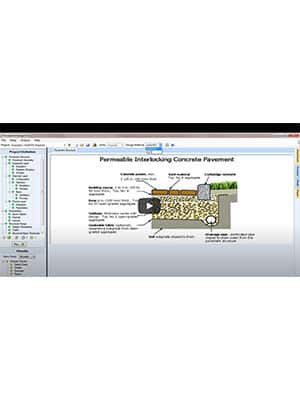
FREE Webinar on How to Use the Permeable Design Pro Now Available on YouTube
Learn how to use Permeable Design Pro for FREE on ICPI’s YouTube channel.
No need to register, just click here to learn why Permeable Design Pro is ICPI’s premium design software for permeable pavement applications. Dave Hein, P. Eng. takes an in depth look at how this software integrates hydraulic and structural solutions, so you may design sustainable stormwater management with PICP for pedestrian areas, parking lots, alleys and streets.
Permeable Design Pro allows users to develop open-graded aggregate base/subbase thickness solutions at the site scale for supporting traffic, and for water storage and infiltration. Perfect for design professionals such as civil engineers, environmental/water resource engineers, pavement engineers, landscape architects, as well as municipal agencies and contractors.
Features include:
Characterizing run-on volumes from adjacent areas and roofs into PICP with Curve Numbers
Referencing an extensive library of 24-hour rainfall depths for U.S. and Canadian cities up to 100-year events, or input local rainfall data
Analyzing infiltration and outflow volumes, curve numbers, and runoff coefficients
Using program default values for soil subgrade strengths and infiltration rates, or input user-supplied data
Designing for no infiltration for detention or water harvesting, or for partial with perforated underdrains, or full infiltration into the soil subgrade
Analyzing base/subbase thickness requirements for vehicular applications up to 1 million ESALs (Caltrans TI = 9)
NCMA/ICPI 2019 Safety Awards Program Winners Announced
132 plants were honored for their commitment to keeping safe manufacturing environments.
[HERNDON, Va. – May 14, 2020] The National Concrete Masonry Association (NCMA) and the Interlocking Concrete Pavement Institute (ICPI), two of the premiere trade associations within the concrete products industry, are pleased to announce the winners of the 2019 NCMA/ICPI Safety Awards.
The prestigious honor is bestowed annually upon plants that demonstrate a commitment to the well-being of their employees and their work environment. An impressive 132 awards were given out to manufacturing locations throughout North America that boast exemplary records.
To view the list of winners, click here.
“We are proud of these award winners, members of both ICPI and NCMA, who consistently exemplify safe manufacturing processes,” said NCMA President Bob Thomas. “Practicing safe manufacturing processes are more than fundamental, they’re paramount. It’s encouraging to see this program effectively highlighting such commitment.”
“The NCMA/ICPI program recognizes the positive safety-conscious work culture of our members,” said ICPI Executive Director Charles McGrath. “We are very pleased with the example that the Safety Award winners set. We are not only honoring members with good safety records, we are also honoring responsible business practices.”
Participants were eligible for awards through their OSHA 300A logs or equivalent Canadian injury reports from January 1 to December 31, 2019. Milestone Awards are given to facilities with more than five consecutive years of Safety Award Program entries with zero OSHA/Canadian injury report injuries. Platinum (highest level of single year achievement), Gold and Silver awards are given based on two formulas, one for Incident Rate (IR) and Days Away for Restrictions and Transfer Rate (DART).
For more on the awards, click here.
For a PDF of this announcement, click here.
****
About NCMA: The National Concrete Masonry Association unites, supports, and represents our members who are producers and suppliers of concrete masonry systems – including concrete masonry, manufactured stone veneer, segmental retaining walls, and other hardscape systems. From small family-owned businesses to large corporations, our membership reflects the full spectrum of companies that provide the foundation for resilient building construction.
About ICPI: The Interlocking Concrete Pavement Institute (ICPI), founded in 1993, is the trade association representing the segmental concrete pavement industry in the United States and Canada. ICPI is considered by peer associations around the world as the leader in development and dissemination of technical information for design professionals and contractors. ICPI engages in a broad range of technical, marketing, educational, government relations and communications activities.

ICPI and NCMA Form Collaboration Committee
The ICPI and NCMA have formed a Collaboration Exploration Committee. The charge of the committee is to explore additional collaboration to better position members to increase market share and review possible areas of consolidation.
The Committee Members are as follows:
Members selected by ICPI:
Dave Carter, Oaks Concrete Products, Co-Chair
Fred Adams, Fred Adams Paving
Kendall Anderegg, Mutual Materials
Charles Gamarekian, Cambridge Pavers
Dean Jurik, ACM Chemistries
Paul Pignatelli, Best Way Stone
Steve Berry, Oldcastle APG
Members selected by NCMA:
Steve Berry, Oldcastle APG, Co-Chair
Eric Absalon, Basalite
Rocky Fizzano, Fizzano Brothers
Terri Grulke, Besser Company
Sam Hoehner, Lee Building
Products
Pat Sauter, Kings Materials
David Pitre, Keystone Hardscapes
Jeff Speck, Arcosa Lightweight
Charles McGrath and Bob Thomas will also participate in all meetings of the committee.
The ICPI and NCMA officers have selected a consulting firm to help facilitate the process of making a decision. Tecker International, was selected based on their experience with similar engagements. Paul Meyer, President, will be the principal on our engagement and will facilitate the process.
Between now and the 2021 Annual Meeting the consultant has proposed the following plan of work:
Step 1: Review of Background Material
Step 2: Design/Planning Session with Co-chairs and staff
Step 2b: Committee Update Calls (May – June – September)
Step 3: Qualitative Telephone Interviews (26-31) May/June
Step 4: Data/Information Analysis – May/June
Step 5: Facilitated Session with Committee – July (hopefully in person)
Step 6: Interim Board Reports – August
Step 7: Development of Dues Structure Analysis & Recommendations – July – September
Step 8: Second Meeting of Committee – December/January
Step 9: Final Report – January
Step 10: Presentation to Association Boards – February
The Board of Directors would like to continue to provide the following messages regarding the work of the committee:
Initial exploratory efforts only
No decisions made and no foregone conclusions
Typical unifications (once agreed) take approximately 2 years
Dues structures and impacts not yet considered
No current staffing changes under consideration
Date April 20th, 2020
ICPI Foundation for Education and Research Reaches $5 Million Endowment Goal
“ICPI Foundation is proud to announce the achievement of our original $5 million endowment goal. This impressive accomplishment reflects the significant commitment industry members have demonstrated, at every contribution level, to funding the essential research and education needs of the industry. The impact the Foundation creates through these efforts is tremendous and continues to move the needle forward for ICPI and all the various industry constituencies that will benefit from this important work.” – David Pitre, Keystone Hardscapes
DATE april 8th, 2020