

ASCE Headquarters Uses PICP in Their Low Impact Development Parking Lot Retrofit – A Suitability Leadership and Demonstration Project
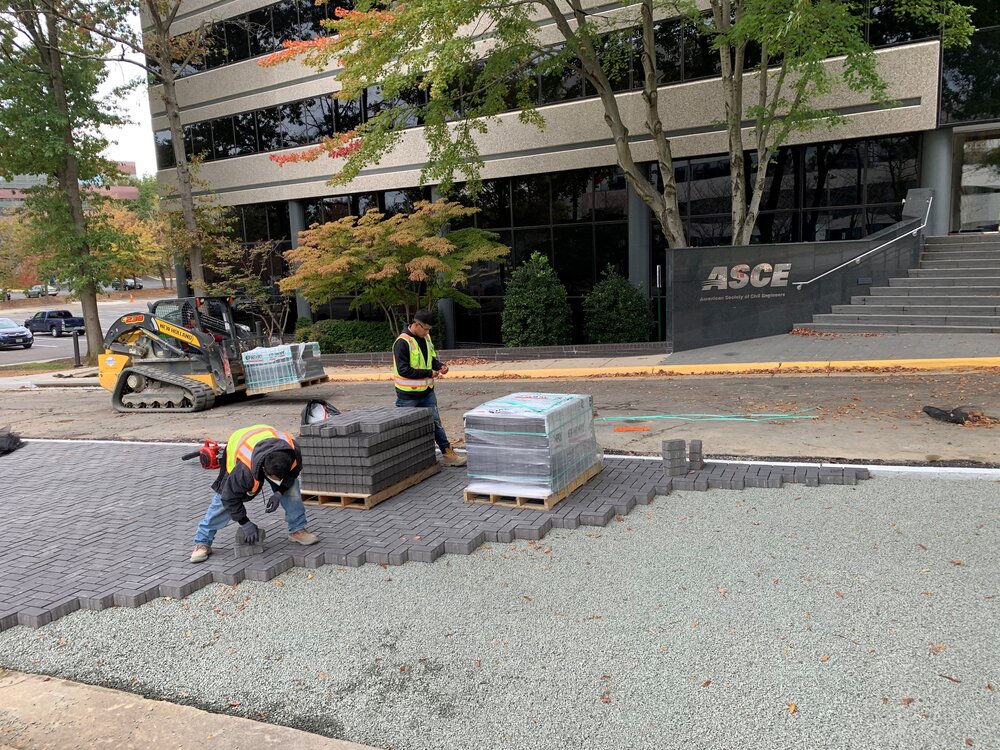
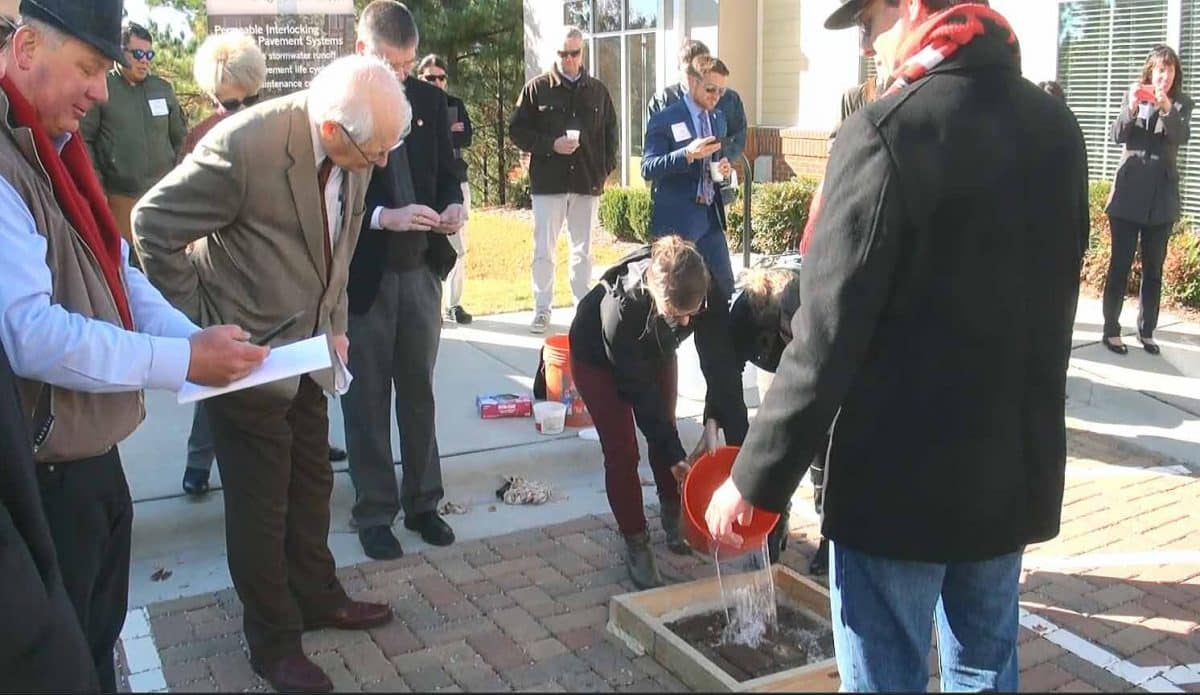
In an ongoing effort to ‘Walk the Talk’ of sustainability and demonstrate the use of low impact development (LID), the American Society of Civil Engineers (ASCE) decided to rehabilitate their existing parking lot and retrofit permeable pavement into it. The ICPI Foundation seized this opportunity to assist ASCE with their effort to incorporate sustainable solutions with the best option, permeable interlocking concrete pavement (PICP).
Construction is underway to install approximately 4,000 sf of PICP in visitor parking at the front entrance which presents the greatest exposure to guests. A weather-resistant sign will also be installed explaining the PICP project near ASCE entrance so guests can learn more about this sustainable solution for urban redevelopment. The project is scheduled to be completed by the end of October.
The ASCE global headquarters is located in Reston, Virginia just outside Washington D.C. Among their 150,000 members about 10,000 visit this building annually to meet, discuss and learn. Among these visitors includes engineers, landscape architects, architects, government officials, academics and students.
Did You Know? ICPI Offers Workforce Development Materials for Contractor Businesses!
ICPI and NCMA have partnered to create @HardscapingIs, a workforce development campaign aimed at 17-20 year-olds and their parents. Resources for the campaign are available for contractors to use to find and attract new installers. Follow @HardscapingIs on Facebook and Instagram and share your story.
And here are resources you can download and share on your social media pages or website (and at in-person career fairs) to help promote our industry:

ICPI Government Affairs Update
[Note: at press time, White House and Hill negotiators continue to discuss a next coronavirus bill. There is no agreement yet to include in this report. However, we do expect a bill to be developed, and that it will include elements important to ICPI and its members. This material will be addressed in other ICPI messaging.]
The impacts of the pandemic on the operational elements of advocacy have been profound. All, or nearly all, of federal advocacy has reverted to remote/virtual mode.
The House and Senate are not taking personal visits by outsiders to congressional offices. Even if personal visits were allowed, visits might be pointless because many personal and committee staff are working at home. Countless meetings, symposia, hearings, markups and more have been postponed or cancelled altogether. The cramped Hill offices, hallways and elevators are simply not compatible with social distancing protocols.
Members of Congress are spending more time at home in their districts and are limiting their physical travel to DC. Procedures are evolving to facilitate it. Committee hearings are being held by the new “hybrid” method (i.e. virtual mode). The House has developed a stop-gap method for voting by proxy not only in committees but also for floor voting. In-person fundraisers have been cancelled; for the time being only virtual options are available.
These developments would have been unthinkable only eight months ago.
In the new era, remote operations have become the only way.
Much of this may not be a temporary aberration that will end with a good COVID-19 vaccine. Much may become permanent, simply the modern way of doing things. The new skills, customs, behaviors and procedures being learned for this pandemic may not be unlearned.
Despite the ongoing coronavirus pandemic, considerable action relevant to ICPI is occurring in the Second Session of the 116th Congress. All action is synergistically impacted by 1) the pandemic, 2) its economic impacts, and 3) the 2020 electoral season. The first two of these factors have not been seen before, and the third is one of the most unique political situations in the recent history of the U.S. For the present, most, not all but most, of the action relevant to ICPI has trended in directions supported by ICPI. ICPI is working to see that continue.
FY21 THUD Appropriations, including Permeable Pavements language. The House Appropriations Committee has adopted language recommended by ICPI in the Committee Report to accompany the House version of the FY21 Transportation, Housing and Urban Development (THUD) Appropriations Bill.
Subsequently the full House of Representatives voted in late July to pass the THUD legislation as part of an appropriations “minibus” combining several appropriations bills. This action follows several months of remote advocacy by ICPI recommending and supporting the language.
The language adopted by the House Appropriations Committee in its Committee Report to accompany the FY21 THUD Appropriations Bill is as follows:
Permeable pavements. —The Committee encourages the Secretary to accelerate research, demonstration, and deployment of permeable pavements to achieve flood mitigation, pollutant reduction, stormwater runoff reduction, environmental conservation, and resilience for new road construction and retrofit of existing roads. The Committee encourages the Secretary to conduct structural evaluations of flood-damaged pavements, with emphasis on local roads and highways subject to flooding and extended periods of inundation. Such evaluations will contribute to understanding the mechanisms of flood damage and how permeable pavements might be used to prevent or reduce damage from future flooding.
ICPI would like to thank the House Appropriations Committee for its continued appreciation of the public policy benefits of permeable pavements and its support for their inclusion to enhance stormwater mitigation, green infrastructure development and water harvesting.
ICPI has provided the same recommendation to the Senate Appropriations Committee, which plans to act later on FY21 appropriations.
The timing for all FY21 appropriations remains unknown given the complicating factors mentioned in the introduction. Several legislative mechanisms are possible, including a Continuing Resolution. Procedurally, it is important that the House adopted the language reprinted above because it sends a strong favorable message, and because its adoption by the House makes the issue more likely to be included in any House-Senate negotiation. Because ICPI supports the language in the House report, ICPI’s strong preference would be to pass any vehicle that would carry the House report language with it. ICPI is following developments closely regarding FY21 THUD Appropriations.
A major general infrastructure bill appears unlikely, but a highway reauthorization remains possible. At the beginning of 2020, both parties and both sides of the Hill expressed strong interest in passing a major infrastructure bill. Those prospects appear remote at this time.
However, there remains the possibility that a highway/surface transportation bill might be passed prior to the 2020 elections. A primary reason for this possibility, and distinguishing from a general infrastructure bill, is that the current highway reauthorization is slated to expire on September 30. Some manner of new law, or extension of current law, is needed to avoid a lapse in authority.
There has been Hill action on the issue. The Senate Environment and Public Works Committee passed a bipartisan bill out of committee in 2019.
The House Transportation and Infrastructure Committee introduced and moved a bill this summer. The House bill has features that are of interest to ICPI.
Unfortunately the House legislation is a partisan bill and contains a number of controversial provisions.
The House and Senate bills are far apart, and a compromise does not seem within reach.
ICPI has signed industry letters supporting passage of an infrastructure bill.
Perhaps the most likely outcome given the calendar, the differences between the House and Senate bills, and the lack of movement on some supplemental new source of funding for the Federal Highway Trust Fund, might be a short-term extension of the current highway authorization. While a short-term extension would be preferable to simply allowing existing authority to expire (which would wreak havoc with current highway projects and all who are working on them), ICPI would prefer a new bill.
The looming question for a short-term extension is how short is short-term. This could be a decisive factor, depending on the outcome of the elections. It would determine which White House and Congress would be in control of drafting the next bill.
Under the current political lineup inside the Beltway, no novel breakthrough on highway construction or funding seems likely or even possible. This might change in 2021 depending on the outcome of the elections.
Enactment of a bipartisan Water Resources Development Act Reauthorization, with features of interest to ICPI, is quite possible. The House has passed a 2020 Reauthorization of the Water Resources Development Act. The bill was assembled with bipartisan involvement and has bipartisan support. The committee report to accompany the bill lists many water development projects for which stormwater action is mentioned specifically.
Meanwhile the Senate Environment and Public Works Committee has reported out of Committee its bipartisan bill, America’s Water Infrastructure Act, which would also reauthorize WRDA and could be compatible/conferenceable with the House bill. The Senate bill includes several provisions of interest to ICPI. This bill is now on the Senate Calendar, eligible for floor consideration.
The Committee chairs have expressed an interest in working together to develop a consensus bill. A consensus bill does seem possible in this instance.
ICPI is following progress on the bill with focused interest, and may offer material to the likely conferees who would negotiate a consensus bill.
The Report from the Select Committee on the Climate Crisis, mention of cement and concrete. The House Select Committee on the Climate Crisis has issued a report in which, as expected, cement and concrete are identified as significant contributors to CO2 releases and global warming.
The report recommends, among other things (highly condensed from the lengthy document): that federal procurement for cement, concrete, and other materials for transportation projects should comply with the “Buy Clean” requirements for low-emissions materials; calls for reduction of carbon emissions from building materials; recommends procurement of low-emission materials and products for federally funded projects; recommends establishing tradable performance credits for materials and products; and much more.
The document is a report, not legislation. We expect it may be referred to in political campaigns leading up to the 2020 elections. For the time being, we expect no near-term impact. However, depending on the outcome of the 2020 elections, it might assume greater policy importance in 2021.
H-2B Worker Visa developments. Leading into June, there had been considerable legislative and regulatory activity affecting the H-2B worker visa issue. ICPI and the H-2B Coalition had been supporting appropriations provisions intended to make additional highly skilled worker H-2B visas available and to curtail some of the bureaucratic impediments in the program.
However, in June, that progress came to an abrupt halt when the President announced suspension of new issuances of most worker visas, including H-2B worker visas, through the end of 2020. The reason given for the suspension was the impact of the pandemic on national unemployment.
ICPI and the H-2B Coalition continue to look for ways to reinvigorate action on the issue, but the outlook is lackluster at best through the end of 2020.
North Carolina State University Takes First Place in National Unit Design Competition
Herndon, VA – Four college teams presented their unique, fresh concrete masonry unit (CMU) designs at the 2020 Unit Design Competition (UDC) during NCMA’s virtual Midyear Event. Judges reviewed and scored the designs and results were announced during the live online event.
The team from North Carolina State University took the top prize over second place Mississippi State, third place Iowa State and honorable mention Ball State.
Due to COVID-19, last minute changes were implemented to keep the competition in play. In lieu of physical story boards and prototypes, students were asked to submit video presentations to allow for an online jury to evaluate.
“Fantastic video presentations” said Jason Thompson, UDC’s Structural Engineer Judge. “These students have a second career in multi-media and graphics.”
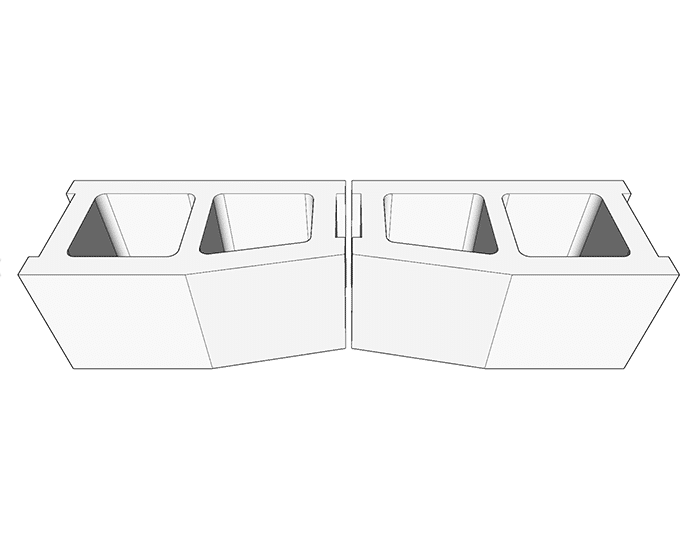
The team of Joshua Albert and Clayton Johnson, all students at North Carolina State University in Raleigh, North Carolina under the tutelage of Professor Vincent Petrarca, took first place. The team’s design, dubbed “Chock Block”, wowed the judges with its highly practical design that can easily incorporated into construction using conventional CMU.
Designed in response to traditional CMUs, Chock Block is a simple, extruded concrete masonry unit that improves the visual experience of concrete masonry while integrating into existing CMU masonry and making no structural compromises. Chock Block is a part of the team’s Angle Face series with the Point and Valley blocks, a collection of blocks sharing a single change, a single move in form, versus traditional blocks. By organizing the angled faces of our blocks, a textured finish that plays with shadow is achieved, an effect amplified with integral coloring. The blocks are efficient to produce, ship, and install, and can easily become more than an accent at little to no extra cost. Through a modest change in design, the team was able to respect concrete masonry as a system and produce remarkable results.
*Note: Video does not have sound.
Second place in the competition was claimed by a team from Mississippi State University in Starkville, Mississippi under the guidance of Professor Jacob A. Gines. They were helped along through vital manufacturing and consulting assistance from Fred Dunand, president of Saturn Materials out of Columbus, Mississippi.
Jackson Harrell, Caya Perry, Ruth Southall and Jon Zeipen presented their design, “Void” while also showcasing their applied skills. The jury loved the hands-on prototyping of the units. Provided not just great visuals, but real-world, practical engagement for the students.
Their design goal was simplicity in form and execution. They wanted to create a concrete masonry unit with one graceful gesture. The concrete unit features a hole which runs the short length of the brick. The second goal of othe design was to create a unit that’s purpose extended beyond aesthetics. Throughout the design process, the team noticed the possibility of an acoustic effect through the horn shaped hole of the unit. After some investigation, they found out that the shape of the hole created unique acoustic opportunities that were not currently addressed in the market.
Coming in at third place was the foursome, Jonathan Kaye, Bill Le, Nathan Nall, and Shivang Patel, with direction from Professor/Advisor Bosuk Hur from Iowa State University in Ames, Iowa with their innovative “INTER(B)LOCK” design. INTER(B)LOCK’s columns impressed the jury and they felt the columns would be a perfect central features to any space…interior or exterior…providing structural function and a novel aesthetic texture.
The INTER(B)LOCK is an exploration into CMU’s detail and relationship with natural phenomena. INTER(B)LOCK’s lock and key modules interlock together in an effort to improve upon CMU’s qualities of modularity, simple production, and scalability by introducing new methods of construction while respecting manufacturing constraints. The modules manifest as curved block forms, inspired by inquiry into the movement of water, air, light, and green nature across time. INTER(B)LOCK’s intentional curvature provides a soft visual texture and enables new forms of manipulation across axes, typologies of existing use cases, and structural and mechanical system integration.
The team of Collin Beresford and Allison Loth, with counselling from Professor Tony Costello, of Ball State University in Muncie, Indiana rounded out the competition with an honorable mention for the groundbreaking “Breeze Block” unit. The judges felt the unit had unique versatility. Few units can function equally as a screen wall and as a permeable paver.
The Breeze Block’s design addresses the issue of insufficient CMU construction methods that exists in Haiti and many other developing countries. The incorporation of recycled water bottles is not only a sustainable strategy, but is also a method of passive cooling in the design. Especially in hot, humid climates like Haiti this will be extremely beneficial in creating thermally comfortable spaces for people to gather. The water bottles will have the bottoms removed and extend the full depth of the masonry unit allowing air to pass through the smaller opening at the mouth. Air is condensed as it moves through the shaft of the bottle which increases its speed and produces a cool breeze. This is also known as the Venturi Effect. The remainder of the recycle water bottles that are not used for passing cooling would be ground up and added to the aggregate. One final strategy incorporated into this CMU design is the use of the arch. This not only secures the water bottles in place, but benefits the structural integrity of the brick as well.
Click here for more information on the NCMA Foundation and the Unit Design Competition.
Click here for a PDF version of this press release.
The NCMA Education and Research Foundation mission is to advance and support the concrete masonry and hardscape industry and the public interest through research and educational programs designed to meet the future needs of the industry.
Video Feature: Davis, California Street Revived with Interlocking and Permeable Interlocking Concrete Pavements
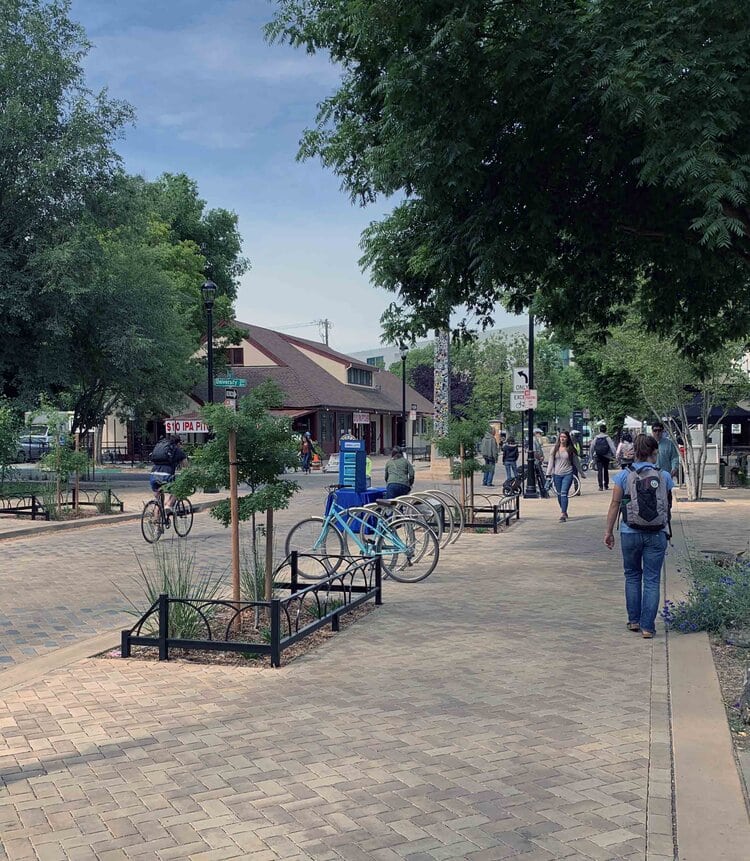
Completed two years ago, two blocks on Third Street in Davis adjacent to the University of California campus saw a complete makeover with ICP and PICP.
The PICP resolved recurring drainage problems on the flat site and ICP united the sidewalk to adjacent restaurants, offices and homes.
The street pavers provide a smooth surface for thousands of student-propelled bicycles traversing the street daily as well as for skateboarders and rollerbladers.
View the video story here. The project was supplied and installed by ICPI members.
Congressman David Price to Participate in Virtual Summer Meeting
Congressman Price will attend the ICPI Government Relations Committee meeting on Tuesday, August 25th at 3:00pm ET. All ICPI members are welcome to attend the question and answer session moderated by Fred Adam constituent of the Congressman and past Chair of the ICPI Government Relations Committee. Congressman Price currently serves on the House Appropriations Committee and is the Chairman of the Transportation, Housing and Urban Development Appropriations Subcommittee. He also serves on the House Budget Committee and is a member of the Appropriations subcommittees on homeland security, State Department, and foreign operations. Congressman Price has been a supporter of permeable interlocking concrete pavements and his subcommittee recently passed language including permeable pavement for FY21 THUD Appropriations bill.
The House Appropriations Committee has released its draft report accompanying the FY21 THUD Appropriations bill ahead of the full committee markup.
The draft contains the ICPI-recommended language regarding permeables.
It is noteworthy that ICPI’s recommendation encompasses all of the report’s explicit reference to permeables that is used by the Committee, the only reference to permeables.
(House Committee on Appropriations, FY21 THUD Appropriations Committee report draft, excerpt):
Permeable pavements.—The Committee encourages the Secretary to accelerate research, demonstration, and deployment of permeable pavements to achieve flood mitigation, pollutant reduction, stormwater runoff reduction, environmental conservation, and resilience for new road construction and retrofit of existing roads. The Committee encourages the Secretary to conduct structural evaluations of flood-damaged pavements, with emphasis on local roads and highways subject to flooding and extended periods of inundation. Such evaluations will contribute to understanding the mechanisms of flood damage and how permeable pavements might be used to prevent or reduce damage from future flooding.
Larry Medley Inducted Into NCMA Hall of Fame
Larry Medley, former vice president of finance & administration at the National Concrete Masonry Association, Herndon, Virginia, was presented with NCMA’s Hall of Fame award August 6 at the association’s Midyear Event held virtually.
NCMA’s Hall of Fame award is presented to the industry’s most valued participants whose careers are highlighted by continual accomplishments on the industry’s behalf, and who have demonstrated unquestioned dedication to NCMA’s highest values.
Larry’s journey began on the Kansas plains where he was born and raised. In 1959, he enrolled at Kansas State University and graduated in 1963 with a Bachelor of Science degree in Accounting and Finance. During his time at Kansas State, participation in ROTC was mandatory for all students. Larry honed his leadership skills and later found a calling to join the military. Upon graduation, he was commissioned as a second lieutenant in the US Army and stationed at Colorado’s Fort Carson.
It was here Larry met Martha Nan McKinney on a 1964 blind date. Nan was vacationing from her home in Dallas. A long-distance relationship blossomed and the two were married a year later. Since that time, the couple have managed multiple deployments, assignments and careers together. They have two grown daughters, Megan and Melissa, that live in the Washington DC area and August 2020 marks their 55th wedding anniversary. In thanks for their many blessings, they serve as volunteer marriage counselors to other young couples.
Larry went on to serve a full 30-year career in the Army with deployments to Vietnam, Korea and Germany. He also continued his education while in the service, completing a master’s degree in Systems Management through the Florida Institute of Technology and attending the National War College to study National Security and Strategy Policy. His military service concluded with an assignment in the White House Military Office, serving under President H W George Bush. He retired in 1993 as a full Colonel.
After his first retirement, Larry leveraged his financial background in private practice. In 2005 he was hired by Mark Hogan at the National Concrete Masonry Association, and by 2007, the NCMA Board of Directors approved him as Vice President of Finance and Administration. During his time at NCMA, he served as an officer of the organization and as its Secretary/Treasurer. Larry anchored a talented NCMA staff known for their technical competence and customer service mentality. Larry recognized the value of relationships and networking and he was just as comfortable in a Political Action Committee reception or on the golf course as he was in the Boardroom.
When he retired in 2017, he was recognized formally by the entire membership following presentations by past NCMA Chair of the Board, Pete Hoyt and his mentee and successor Richard Gemelaris.
Since his second retirement, he has had more time to travel with Nan and his family, fine tune his golf game, and volunteer his management skills as Finance Director and Treasurer for Christ Church Vienna in Vienna, Virginia.
For a PDF copy of this press release, click here.

ICPI Releases 2020 Industry Sales Profile
The Interlocking Concrete Pavement Institute released its annual Industry Sales Profile. Reporting on survey results since 1999, this year’s profile represents the most accurate and current sales information publicly available on the United States and Canadian segmental concrete pavement industry. There are over 100 manufacturing companies with more than 200 plant locations operating in the US and Canada making segmental concrete paving products part or full-time on approximately 250 high-output machines.
A total of 20 manufacturers, representing 130 paver-producing machines participated in the survey formed the basis for the 30-page Profile. Respondents provided sales data for calendar 2018 and 2019 for concrete pavers, permeable pavers, grid paving units and paving slabs. Collecting two years of data enabled seeing year-over-year trends. The report also provides sales trends since 2011 which demonstrates continued industry growth since emerging from the Great Recession. More importantly, data on sales to residential, commercial/municipal and industrial markets are provided.
Among the noteworthy trends revealed in this year’s report is shown in the chart below. US & Canada combined permeable paver sales (PICP) grew from 1.61 million square feet in 2018 to 1.71 million square feet in 2019 among the companies responding to the survey. When projected to the total number of manufactures, this product leads the segmental pavement market in growth in the U.S. Looking back at previous years’ survey results, the data suggests continued growth above industry averages compared to other paving products. This trend is likely driven by regulations on reducing stormwater runoff pollutants and volumes in commercial and residential projects.
Copies of this year’s ICPI Industry Sales Profile are provided free to this year’s survey participants and available for purchase from the ICPI website at https://icpi.org/bookstore with a substantial discount for ICPI members.
FY21 US Transportation, Housing and Urban Development (THUD) Appropriations Bill Draft Includes ICPI-Recommended Language Regarding Permeable Pavement
The US House Appropriations Committee has released its draft report accompanying the FY21 THUD Appropriations bill ahead of the full committee markup. The draft contains ICPI-recommended language regarding permeable pavement. It is noteworthy that ICPI’s recommendation encompasses all the report’s explicit reference to permeable pavements that is used by the Committee, the only reference to permeable pavement.
(House Committee on Appropriations, FY21 THUD Appropriations Committee report draft, excerpt):
Permeable pavements.—The Committee encourages the Secretary to accelerate research, demonstration, and deployment of permeable pavements to achieve flood mitigation, pollutant reduction, stormwater runoff reduction, environmental conservation, and resilience for new road construction and retrofit of existing roads. The Committee encourages the Secretary to conduct structural evaluations of flood-damaged pavements, with emphasis on local roads and highways subject to flooding and extended periods of inundation. Such evaluations will contribute to understanding the mechanisms of flood damage and how permeable pavements might be used to prevent or reduce damage from future flooding.
The FY21 THUD Appropriations bill is not yet law and will need to take several big steps before that occurs; but this establishes a strong baseline and the baseline that ICPI was seeking and makes such anticipatory thinking worthwhile.
OSHA Releases Instructions for Inspection Procedures for the Respirable Crystalline Silica Standards
In late June OSHA releases the documents as a follow up to their National Emphasis Program for Respirable Crystalline Silica.
This new Instruction establishes OSHA’s field inspection and enforcement procedures designed to ensure uniformity when addressing respirable crystalline silica exposures in the workplace. These two expanded health standards, one for construction (29 CFR § 1926.1153) and the other for general industry/maritime (29 CFR § 1910.1053), were published in the Federal Register on March 25, 2016, and became effective June 23, 2016.
The two new standards adopted a new permissible exposure limit (PEL) of 50 micrograms of respirable crystalline silica per cubic meter of air (μg/m³) as an 8-hour time-weighted average.
Construction industry employers were scheduled to be in compliance with all the standard’s provisions, except for methods of sample analysis, by June 23, 2017. However, on April 6, 2017, OSHA extended the initial compliance date to September 23, 2017. The compliance date for the methods of sample analysis requirements remained unchanged at June 23, 2018.
The Instruction provides further clarification of terms and further guidance for CSHO (Compliance Safety and Health Officer) when auditing an employer including checklists and a questionnaire for workers. Additional illustrative examples are also provided.
The full 124-page document is available here.