

ICPI and NCMA Approve Unification
The results are in, and by an overwhelming margin, the members of both ICPI and NCMA have voted to unify the two associations. While the election is now complete, there is much to do as we prepare for the July 2022 launch of your new association.
Very soon, the unification website will begin providing regular updates to keep members up to date on activities and progress.
To all the voting members of ICPI, thank you for weighing in at this important moment in our shared history. Please stay engaged. Your voice will be important in the days, months, and years ahead!
ICPI Government Affairs Update
At this writing, Congress has recently passed HR3684, the $1.2 trillion Bipartisan Infrastructure Bill, (also referred to as BIB, BIF and several other names). The President has signed it into law.
Further, hours before this writing, the House passed more controversial “climate and social infrastructure” bill, a $1.9 trillion piece of legislation. This bill is now sent to the Senate for consideration there, with possible substantial amendment. We do not believe that the House-passed version will pass the Senate without significant amendments on major issues.
Coming up, by December 3, the Continuing Resolution that is currently funding the federal government is slated to expire requiring either a succeeding Continuing Resolution or new Appropriations to be passed so as to avoid a government shutdown.
In addition, there is action to report on the OSHA front with vaccine mandates and action on H-2B worker visas.
———
HR3684, the $1.2 trillion Bipartisan Infrastructure Bill: on November 5, 2021, Congress completed development and passage of HR3684, the Infrastructure and Investment Jobs Act (also known as the Bipartisan Infrastructure Bill). It is now law.
ICPI strongly supported passage of a Bipartisan Infrastructure Bill and signed multiple joint industry letters to the Hill stating the same.
The legislation authorizes $1.2 trillion for a wide array of infrastructure development, including construction on roads, bridges, mass transit, water facilities and more. Clearly, ICPI members will wish to engage the infrastructure authorities within their marketing areas to track developments in how the funding and policy under this legislation will have a local economic and construction impact on projects in which they may have interest.
While the bill is filled with provisions that will fund infrastructure projects throughout the economy, we call ICPI members’ attention to specific provisions of unique interest to the ICPI community regarding permeable pavement and stormwater reduction. It is possible that ICPI might wish to provide technical input for some of these activities. Some were recommended or specifically supported by ICPI in conversations with Capitol Hill infrastructure leadership.
We note there are multiple provisions in both the bill text and the accompanying committee reports that make references to permeable, pervious and porous pavements. We assume that various provisions originated from various sources and from various authors, and that multi-sourcing is seen in the variable usage of permeable, pervious and porous. We see no apparent purpose or reason to conclude that Congress meant to include one technology to the exclusion to or preference over others, and in fact it would seem the that greatest likelihood is that Congress uses these terms interchangeably as does much of the non-engineering world. It would appear that, regardless of the specific term used in any provision, Congress’ intent is to advance the use of pavements that allow rainwater to pass through pavements into the in situ soil, in juxtaposition to impervious pavements, a term also used in the bill. Thus as ICPI talks with USDOT/FHWA and state/local authorities regarding these provisions, ICPI can make this observation and encourage the authorities to adopt the broad inclusive viewpoint. In addition, should ICPI participate in the permeable and pavement studies authorized in this legislation, ICPI may wish to advocate that the authorities that use these materials understand and adopt the broader inclusive view as the true intent of Congress and the best means to realize the public policy goals (improved water quality, reduced stormwater runoff, etc.) that Congress intends to advance with this legislation.
The development of this infrastructure bill has involved one of the most complicated drafting exercises among many committees on both sides of the Hill; in fact the process has taken years of “Transportation Weeks” and many draft versions. While the final legislation did not include every possible provision that ICPI would have preferred from start to finish, it does provide multiple opportunities to advance policy on permeable pavements, stormwater runoff reduction, and helps solidify the linkage between permeable pavements and environmental goals such as stormwater reduction.
Here are some of the more ICPI-specific, paver-specific highlights in the bill text. These are only selected highlights; readers may wish to peruse the full bill text and committee report language for additional issues such as the water project features:
SEC. 11518. PERMEABLE PAVEMENTS STUDY.
(a) In General.–Not later than 1 year after the date of enactment
of this Act, the Secretary shall carry out a study–
(1) to gather existing information on the effects of permeable
pavements on flood control in different contexts, including in
urban areas, and over the lifetime of the permeable pavement;
(2) to perform research to fill gaps in the existing
information gathered under paragraph (1); and
(3) to develop–
(A) models for the performance of permeable pavements in
flood control; and
(B) best practices for designing permeable pavement to meet
flood control requirements.
(b) Data Survey.–In carrying out the study under subsection (a),
the Secretary shall develop–
(1) a summary, based on available literature and models, of
localized flood control capabilities of permeable pavement that
considers long-term performance and cost information; and
(2) best practices for the design of localized flood control
using permeable pavement that considers long-term performance and
cost information.
(c) Publication.–The Secretary shall make a report describing the
results of the study under subsection (a) publicly available.
SEC. 11519. EMERGENCY RELIEF PROJECTS.
(a) Definition of Emergency Relief Project.–In this section, the
term “emergency relief project” means a project carried out under the
emergency relief program under section 125 of title 23, United States
Code.
(b) Improving the Emergency Relief Program.–Not later than 90 days
after the date of enactment of this Act, the Secretary shall–
(1) revise the emergency relief manual of the Federal Highway
Administration–
(A) to include and reflect the definition of the term
“resilience” (as defined in section 101(a) of title 23,
United States Code);
(B) to identify procedures that States may use to
incorporate resilience into emergency relief projects; and
(C) to encourage the use of Complete Streets design
principles and consideration of access for moderate- and low-
income families impacted by a declared disaster;
(2) develop best practices for improving the use of resilience
in–
(A) the emergency relief program under section 125 of title
23, United States Code; and
(B) emergency relief efforts;
(3) provide to division offices of the Federal Highway
Administration and State departments of transportation information
on the best practices developed under paragraph (2); and
(4) develop and implement a process to track–
(A) the consideration of resilience as part of the
emergency relief program under section 125 of title 23, United
States Code; and
(B) the costs of emergency relief projects.
——-
SEC. 11520. STUDY ON STORMWATER BEST MANAGEMENT PRACTICES. (a) Study.--Not later than 180 days after the date of enactment of this Act, the Secretary and the Administrator of the Environment Protection Agency shall offer to enter into an agreement with the Transportation Research Board of the National Academy of Sciences to conduct a study-- (1) to estimate pollutant loads from stormwater runoff from highways and pedestrian facilities eligible for assistance under title 23, United States Code, to inform the development of appropriate total maximum daily load (as defined in section 130.2 of title 40, Code of Federal Regulations (or successor regulations)) requirements; (2) to provide recommendations regarding the evaluation and selection by State departments of transportation of potential stormwater management and total maximum daily load compliance strategies within a watershed, including environmental restoration and pollution abatement carried out under section 328 of title 23, United States Code (including any revisions to law (including regulations) that the Transportation Research Board determines to be appropriate); and (3) to examine the potential for the Secretary to assist State departments of transportation in carrying out and communicating stormwater management practices for highways and pedestrian facilities that are eligible for assistance under title 23, United States Code, through information-sharing agreements, database assistance, or an administrative platform to provide the information described in paragraphs (1) and (2) to entities issued permits under the Federal Water Pollution Control Act (33 U.S.C. 1251 et seq.). (b) Requirements.--If the Transportation Research Board enters into an agreement under subsection (a), in conducting the study under that subsection, the Transportation Research Board shall-- (1) review and supplement, as appropriate, the methodologies examined and recommended in the report of the National Academies of Sciences, Engineering, and Medicine entitled ``Approaches for Determining and Complying with TMDL Requirements Related to Roadway Stormwater Runoff'' and dated 2019; (2) consult with-- (A) the Secretary; (B) the Administrator of the Environmental Protection Agency; (C) the Secretary of the Army, acting through the Chief of Engineers; and (D) State departments of transportation; and (3) solicit input from-- (A) stakeholders with experience in implementing stormwater management practices for projects; and (B) educational and technical stormwater management groups. (c) Report.--If the Transportation Research Board enters into an agreement under subsection (a), not later than 18 months after the date of enactment of this Act, the Transportation Research Board shall submit to the Secretary, the Committee on Environment and Public Works of the Senate, and the Committee on Transportation and Infrastructure of the House of Representatives a report describing the results of the study. ------- SEC. 11521. STORMWATER BEST MANAGEMENT PRACTICES REPORTS. (a) Definitions.--In this section: (1) Administrator.--The term ``Administrator'' means the Administrator of the Federal Highway Administration. (2) Best management practices report.--The term ``best management practices report'' means-- (A) the 2014 report sponsored by the Administrator entitled ``Determining the State of the Practice in Data Collection and Performance Measurement of Stormwater Best Management Practices''; and (B) the 1997 report sponsored by the Administrator entitled ``Stormwater Best Management Practices in an Ultra-Urban Setting: Selection and Monitoring''. (b) Reissuance.--Not later than 1 year after the date of enactment of this Act, the Administrator shall update and reissue each best management practices report to reflect new information and advancements in stormwater management. (c) Updates.--Not less frequently than once every 5 years after the date on which the Administrator reissues a best management practices report described in subsection (b), the Administrator shall update and reissue the best management practices report until the earlier of the date on which-- (1) the best management practices report is withdrawn; or (2) the contents of the best management practices report are incorporated (including by reference) into applicable regulations of the Administrator. ——-
SEC. 11406. HEALTHY STREETS PROGRAM. (a) Definitions.--In this section: (1) Cool pavement.--The term ``cool pavement'' means a pavement with reflective surfaces with higher albedo to decrease the surface temperature of that pavement. (2) Eligible entity.--The term ``eligible entity'' means-- (A) a State; (B) a metropolitan planning organization; (C) a unit of local government; (D) a Tribal government; and (E) a nonprofit organization working in coordination with an entity described in subparagraphs (A) through (D). (3) Low-income community.--The term ``low-income community'' means a census block group in which not less than 30 percent of the population lives below the poverty line (as defined in section 673 of the Community Services Block Grant Act (42 U.S.C. 9902)). (4) Porous pavement.--The term ``porous pavement'' means a paved surface with a higher than normal percentage of air voids to allow water to pass through the surface and infiltrate into the subsoil. (5) Program.--The term ``program'' means the Healthy Streets program established under subsection (b). (6) State.--The term ``State'' has the meaning given the term in section 101(a) of title 23, United States Code. (7) Tribal government.--The term ``Tribal government'' means the recognized governing body of any Indian or Alaska Native tribe, band, nation, pueblo, village, community, component band, or component reservation, individually identified (including parenthetically) in the list published most recently as of the date of enactment of this Act pursuant to section 104 of the Federally Recognized Indian Tribe List Act of 1994 (25 U.S.C. 5131). (b) Establishment.--The Secretary shall establish a discretionary grant program, to be known as the ``Healthy Streets program'', to provide grants to eligible entities-- (1) to deploy cool pavements and porous pavements; and (2) to expand tree cover. (c) Goals.--The goals of the program are-- (1) to mitigate urban heat islands; (2) to improve air quality; and (3) to reduce-- (A) the extent of impervious surfaces; (B) stormwater runoff and flood risks; and (C) heat impacts to infrastructure and road users. (d) Application.-- (1) In general.--To be eligible to receive a grant under the program, an eligible entity shall submit to the Secretary an application at such time, in such manner, and containing such information as the Secretary may require. (2) Requirements.--The application submitted by an eligible entity under paragraph (1) shall include a description of-- (A) how the eligible entity would use the grant funds; and (B) the contribution that the projects intended to be carried out with grant funds would make to improving the safety, health outcomes, natural environment, and quality of life in low-income communities and disadvantaged communities. (e) Use of Funds.--An eligible entity that receives a grant under the program may use the grant funds for 1 or more of the following activities: (1) Conducting an assessment of urban heat islands to identify hot spot areas of extreme heat or elevated air pollution. (2) Conducting a comprehensive tree canopy assessment, which shall assess the current tree locations and canopy, including-- (A) an inventory of the location, species, condition, and health of existing tree canopies and trees on public facilities; and (B) an identification of-- (i) the locations where trees need to be replaced; (ii) empty tree boxes or other locations where trees could be added; and (iii) flood-prone locations where trees or other natural infrastructure could mitigate flooding. (3) Conducting an equity assessment by mapping tree canopy gaps, flood-prone locations, and urban heat island hot spots as compared to-- (A) pedestrian walkways and public transportation stop locations; (B) low-income communities; and (C) disadvantaged communities. (4) Planning activities, including developing an investment plan based on the results of the assessments carried out under paragraphs (1), (2), and (3). (5) Purchasing and deploying cool pavements to mitigate urban heat island hot spots. (6) Purchasing and deploying porous pavement to mitigate flooding and stormwater runoff in-- (A) pedestrian-only areas; and (B) areas of low-volume, low-speed vehicular use. (7) Purchasing of trees, site preparation, planting of trees, ongoing maintenance and monitoring of trees, and repairing of storm damage to trees, with priority given to-- (A) to the extent practicable, the planting of native species; and (B) projects located in a neighborhood with lower tree cover or higher maximum daytime summer temperatures compared to surrounding neighborhoods. (8) Assessing underground infrastructure and coordinating with local transportation and utility providers. (9) Hiring staff to conduct any of the activities described in paragraphs (1) through (8). (f) Priority.--In awarding grants to eligible entities under the program, the Secretary shall give priority to an eligible entity-- (1) proposing to carry out an activity or project in a low- income community or a disadvantaged community; (2) that has entered into a community benefits agreement with representatives of the community; or (3) that is partnering with a qualified youth or conservation corps (as defined in section 203 of the Public Lands Corps Act of 1993 (16 U.S.C. 1722)). (g) Distribution Requirement.--Of the amounts made available to carry out the program for each fiscal year, not less than 80 percent shall be provided for projects in urbanized areas (as defined in section 101(a) of title 23, United States Code). (h) Federal Share.-- (1) In general.--Except as provided under paragraph (2), the Federal share of the cost of a project carried out under the program shall be 80 percent. (2) Waiver.--The Secretary may increase the Federal share requirement under paragraph (1) to 100 percent for projects carried out by an eligible entity that demonstrates economic hardship, as determined by the Secretary. (i) Maximum Grant Amount.--An individual grant under this section shall not exceed $15,000,000. (j) Treatment of Projects.--Notwithstanding any other provision of law, a project assisted under this section shall be treated as a project on a Federal-aid highway under chapter 1 of title 23, United States Code.———
Thus far this memorandum has referenced actual bill language in the final enacted version of HR3684. There are two accompanying committee reports that can be used to help interpret the intent of Congress as both Houses of Congress drafted their respective versions of major infrastructure legislation. One committee report (H.Rpt. 117-70) was used to enhance the earlier House version of the bill, and another committee report (S. Rpt. 117-41) was used to enhance the Senate version. While the Senate was the later body to amend the final bill and the House subsequently voted to adopt and pass the Senate-amended version, we suggest that the House report might also be consulted to provide insight into congressional thinking on some of the issues addressed in the legislation.
H.Rpt. 117-70 contains language to explicitly include permeable pavements as a “protective feature” in USDOT programs. ICPI specifically supported this passage. We note that the passage was not included in the Senate report. We believe that the difference reflects the manner in which both bodies developed their own drafts, and drafted independently, rather than any intentional difference of opinion on this topic.
The following is the H.Rpt. 117-70 passage on “protective features” that makes reference to permeable pavements and we think it expresses the view of the House:
(B) Inclusions.--The term ``protective feature'' includes-- (i) raising roadway grades; (ii) relocating roadways to higher ground above projected flood elevation levels or away from slide prone areas; (iii) stabilizing slide areas; (iv) stabilizing slopes; (v) lengthening or raising bridges to increase waterway openings; (vi) increasing the size or number of drainage structures; (vii) replacing culverts with bridges or upsizing culverts; (viii) installing seismic retrofits on bridges; (ix) scour, stream stability, coastal, and other hydraulic countermeasures; (x) the use of natural infrastructure; (xi) integration of the use of traditional and natural infrastructure features; (xii) undergrounding public utilities in the course of other infrastructure improvements eligible under this title; and (xiii) permeable pavements for stormwater management. ———
The “climate and social infrastructure” legislation, or the “BR” for Budget Reconciliation. This legislation is one of the broadest, most comprehensive and expensive measures likely to be attempted any time soon. It is a vehicle for many of the issues that resonated in the 2020 elections and will likely continue to move elections in 2022 and beyond. The cost is itself controversial and a reason why some Democrats are having difficulty committing to it.
The final outlook for the bill or anything resembling it is impossible to determine at this writing.
Because of the subject matter breadth of the legislation, many industry representatives are focusing comments about various possible elements. There are pieces that some industries oppose vigorously but others that might be supportable individually; for example some infrastructure development features that have been included in base drafts could be attractive to some industry advocates.
ICPI continues to watch developments with an eye towards working with the construction and industrial communities when and if input on specific elements would be useful and helpful.
———
FY22 Appropriations status, with focus on the House FY22 THUD Appropriations bill and committee report:
As reported previously, the House has indeed passed its FY22 THUD Appropriations as part of a larger package of funding bills and has referred that package to the Senate for consideration.
In late summer, it became apparent that the Hill would be unable to complete work on the various FY22 Appropriations bills in time to avoid a government shutdown. As an alternative, the Hill passed and the President signed a Continuing Resolution (CR) to continue funding at FY21 levels.
That CR is slated to expire on December 3. Further action will be required by that date to avoid a government shutdown.
ICPI continues to support passage of new FY22 Appropriations bills, focusing on the FY THUD Appropriations bill as part of a package.
The House Committee Report to accompany the FY22 THUD Appropriations bill contains language advocated by ICPI in a joint conversation with subcommittee staff. The report language eventually adopted by the House Appropriations Committee is as follows:
Permeable pavements.—The Committee continues to encourage the Secretary to accelerate research, demonstration, and deployment of permeable pavements to achieve flood mitigation, pollutant reduction, stormwater runoff reduction, environmental conservation, and resilience for new road construction and retrofit of existing roads. The Committee encourages the Secretary to conduct structural evaluations of flood-damaged pavements, with emphasis on local roads and highways subject to flooding and extended periods of inundation, to understand the mechanisms of flood damage and how permeable pavements might be used to prevent or reduce damage from future flooding. Furthermore, the Secretary is encouraged to work with the Federal Emergency Management Agency (FEMA) and the Environmental Protection Agency (EPA), as both agencies are also doing work in the area of permeable pavements and a cross-agency collaboration may yield more innovation. As such, the Committee directs the Department to submit a report within 240 days of enactment of this Act to the House and Senate Committees on Appropriations detailing current efforts, utilization, and research within FHWA and efforts made with FEMA and EPA.
ICPI had expressed the concern to Appropriations staff that USDOT/FHWA may not regard the role of permeable pavements, and the roadsides where they would be applicable, to be central to the USDOT/FHWA mission. In thinking about this problem, ICPI considered that the input of other agencies that are further along in understanding the beneficial role of pavers (for example EPA and FEMA) with respect to stormwater management would be helpful and informative to USDOT/FHWA.
ICPI applauds the House interest in a collaboration among USDOT, FEMA and EPA in this regard. ICPI would be happy to offer technical assistance in such a collaboration.
We observe that key infrastructure leaders across the House and Senate have well received ICPI’s educational advocacy regarding permeable pavements and the linkage with stormwater management. We thank them for their kind attention and excellent interest in the issues.
———
H-2B Worker Visa action: There has been considerable recent action regarding the H-2B worker visa program. H-2B remains a priority for ICPI which is pleased to continue work with the H-2B Coalition on these issues, and we are pleased to use material from the Coalition in this report.
ICPI has signed joint industry letters encouraging the federal government to release as many worker visas as possible.
Further, ICPI supports cosponsorship of the H-2B Returning Worker Exception Act to make it easier for returning workers to continue in the H-2B worker visa program.
On November 3, USDOL announced the following, which serves as a good summary of late summer H-2B action:
November 3, 2021. The Department of Labor’s Response to Stakeholder Requests to Raise the H-2B Visa Cap for the First Half of Fiscal Year 2022
The Department of Labor (Department or DOL) continues to recognize that obtaining a reliable workforce is crucial to meeting the temporary or seasonal labor needs of American businesses. The Department also recognizes how important it is to help Americans get back to work. We are committed to building a modern, inclusive workforce – ensuring all workers have good jobs, fair wages and working conditions, and opportunities for advancement.
The Immigration and Nationality Act (INA) sets the cap on the annual number of non-citizens who may be issued H-2B visas or otherwise provided H-2B nonimmigrant status to perform temporary non-agricultural work at 66,000, to be distributed semi-annually beginning in October and April (H-2B cap). The Department of Homeland Security’s (DHS) United States Citizenship and Immigration Services (USCIS) has the statutory responsibility for determining whether the H-2B cap has been reached in each semi-annual period based on the number of H-2B petitions it receives.
On October 12, 2021, USCIS announced that on September 30, 2021 it had reached the congressionally mandated cap for H-2B visas for temporary nonagricultural workers for the first half of the FY 2022. Except where the H-2B petition qualifies for an exemption from the statutory visa cap, USCIS is currently rejecting new cap-subject petitions received after September 30, 2021 that request an employment start date before April 1, 2022.
While the 33,000 H-2B cap for the first half of FY 2022 has been reached, we encourage every employer seeking workers to visit the almost 2,400 American Job Centers (AJC) nationwide to find and hire talented workers, as well as to train and retain qualified workers. Additionally, the Department recognizes the incredible value of our nation’s veterans and encourages tapping into their skills and talents. There are Veteran Employment Representatives in every AJC across the country who can assist businesses and veterans with their employment needs. You may also consider working with the Department’s Veterans’ Employment and Training Service to facilitate recruitment efforts in the veteran community.
Again, we understand the importance of this issue to both workers and employers. In recent years, Congress has enacted a series of public laws that provided the Secretary of Homeland Security with time-limited, discretionary authority to increase the H-2B cap beyond the number set forth in the INA after consultation with the Secretary of Labor. The Department will continue working collaboratively with our partners at DHS in an ongoing effort to ensure effective operation of the H-2B program.
Earlier in the year, during House FY22 Appropriations consideration for USDOL and USDHS funding, appropriators added language to the H-2B worker visa provisions that would further prompt the Secretary to make additional worker visas available during FY22. ICPI and the Coalition support this language.
Further during the appropriations process in the House, pro-H-2B Members successfully resisted several proposals that could have effectively gutted the H-2B program. Proposals would-
-Prohibit industries from using the H-2B program if they experienced unemployment
in any of the previous 12 months over 10%;
Prohibit construction industries from using the program even in seasonal locations or occupations;
Increase the baseline for wages to at least 150% of the federal or state minimum wage, whichever is higher;
Require wage compliance with a collective bargaining agreement for your industry in the area, even if a company is not a party to the agreement;
Ban participation in the program for labor/workforce related infractions outside of the scope of the H-2B program.
ICPI and the Coalition opposed all these amendments.
As mentioned above, the outcome on all FY22 Appropriations, including Labor and DHS, remain to be determined with the upcoming December 3 CR deadline.
———
OSHA Emergency Temporary Standard on COVID-19 vaccination and testing: OSHA has issued an Emergency Temporary Standard on COVID-19 vaccination and testing. The policies surrounding mandatory vaccination and testing is being contested in the courts and the outcome is uncertain. At this writing legal challenges have led to a pause in implementation of the OSHA policy. Having said that, we provide the following material sourced from the U.S. Small Business Administration Office of Advocacy which describes what OSHA seeks to do, and we thank SBA staff for their information.
OSHA Issues Emergency Temporary Standard On COVID-19 Vaccination And Testing
On November 5, 2021, the Occupational Safety and Health Administration (OSHA) published an Emergency Temporary Standard (ETS) on mandatory “COVID-19 Vaccination and Testing” under section 6(c)(1) of the Occupational Safety and Health Act. The ETS requires employers with 100 or more employees to develop, implement, and enforce a mandatory COVID-19 vaccination policy, except for covered employers that adopt an alternative policy of requiring employees to undergo regular COVID–19 testing and wear a face covering at work. OSHA has determined that a grave danger exists that necessitates the ETS and that the ETS is both technically and economically feasible for covered employers. The rule is effective immediately and employers must comply with most requirements within 30 days and with testing requirements within 60 days. The ETS is open for public comment through December 6, 2021.
Industry Enjoys Impressive 16% Concrete Paver Growth Confirmed in ICPI’s 2021 Sales Survey
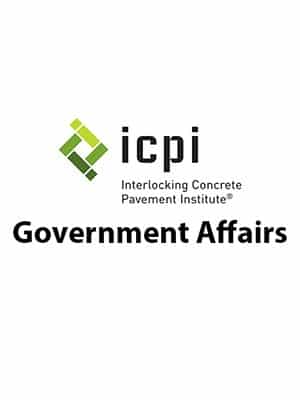
For the tenth consecutive year, combined sales of segmental concrete pavement products in the United States and Canada increased according to the 2021 Industry Sales Profile released by the Interlocking Concrete Pavement Institute (ICPI) which reported on 2020 sales.
The 2020 projected total of 818.2 million sf is a post-recession high, representing a 9.2% increase from the 742.6 million sf in 2019 and a 71% increase from the low of 478.4 million sf in 2011. The 2020 mark exceeds the all-time high for sales of 800 million sf established in 2006 prior to the recession.
The study surveyed 27 manufacturers representing 30% of all producing companies in the U.S. and Canada. These companies own approximately 58% (145) of the paver producing machines in the two countries. The survey was conducted by Industry Insights, an independent research consulting firm based in Dublin, Ohio.
The estimated combined U.S. and Canadian use of concrete pavers in 2020 equaled 2.21 sf per person compared to 2.05 sf in 2019.
“Covid’s silver lining brought intense demand for traditional and new segmental concrete pavement products,” said Marshall Brown, PhD, ICPI Chair. “Disposable income not spent on vacations went into home improvements in 2020 including thousands of backyard hardscaping projects. Residential and commercial sales grew because many homeowners, businesses, and government officials realize that no other pavement system offers the durability, design flexibility, sustainability, long-term cost-effectiveness, safety, and appearance like concrete pavers.”
Sales growth was 18% in the U.S. and 6.42% in Canada among survey participants. Products for residential use represented 80.4% of sales, while commercial and municipal applications comprised the remainder. Interlocking concrete pavers comprised 77% of products sold by survey participants, while paving slabs were the second-most popular product at 26.5%. Besides the surge in residential sales from Covid, the report attributed low interest rates and rising home values as contributing factors. In spite of Covid, commercial use of concrete pavers and paving slabs increased.
The survey report also pointed out that, “ Labor shortages in manufacturing and construction abounded in 2020 thanks in part to generous government unemployment payments that provided a disincentive for not seeking employment in other occupations than those contracted by Covid. This welfare doubly affected the construction industry labor shortage already suffering from an insufficient workforce numbers dating back for years.”
“While ICPI continues technical and contractor education programs that support existing sales, we are also focused on addressing workforce shortages our industry faces with the broader construction industry,” said Dr. Brown. “Three of every four contractors who have participated in surveys by ICPI indicated that their top business obstacle is recruiting and retaining qualified employees. ICPI created and delivered training programs to trade schools and university construction programs as well as a vigorous social media campaign to attract young people into the installation/contracting business. ICPI is delivering tools to teach installation skills to needed to succeed and eventually manage a contracting business someday.”
Key Findings:
Combined U.S. & Canada Data
Estimated Overall Concrete Paver Sales
· Projected at 818.2 million sf.
· 16% increase over 2019
· 80.4% projected (657.8 million sq.) sold to residential market
Permeable Interlocking Concrete Pavement (PICP)
· 8.5% of all ASTM/CSA paver sales
· Half sold to the commercial and municipal markets
Concrete Paving Slabs
· 14.4% of all (ASTM) paver sales
· 77.9% sold to residential applications
· Realized an average 25% increase in sales compared to 2019.
Concrete Grid Pavements
· Estimated 3.0 million sf.
· 0.3% of the total segmental concrete pavement production
· 54.1% sales to the commercial, municipal, and industrial markets
Congress Passes Infrastructure and Investment Job Act
HR3684, the $1.2 trillion Bipartisan Infrastructure Bill: on November 5, 2021, Congress completed development and passage of HR3684, the Infrastructure and Investment Jobs Act (also known as the Bipartisan Infrastructure Bill). At this writing, the bill awaits enactment into law with the President’s signature. The White House has said the President will sign the bill into law, soon.
ICPI strongly supported passage of a Bipartisan Infrastructure Bill and has signed multiple joint industry letters to the Hill stating the same.
The legislation authorizes $1.2 trillion for a wide array of infrastructure development, including construction on roads, bridges, mass transit, water facilities and more. Clearly, ICPI members will wish to engage the infrastructure authorities within their market areas to track developments in how the funding and policy under this legislation will have a local economic and construction impact on projects in which they may have interest.
While the bill is filled with provisions that will fund infrastructure projects throughout the economy, we call ICPI members’ attention to specific provisions of unique interest to the ICPI community regarding permeable pavement and stormwater reduction. It is possible that ICPI might wish to provide technical input for some of these activities. Some were recommended or specifically supported by ICPI in conversations with Capitol Hill infrastructure leadership.
Regarding issues of special interest to permeable pavements interests and the relationship between permeables and stormwater reduction, the legislation includes a study of permeable pavements and stormwater management. These present possible opportunities for ICPI to participate to offer knowledge and expertise as to how permeable pavements can benefit public policy.
HNA Returns to Huge Demand for Learning in Louisville
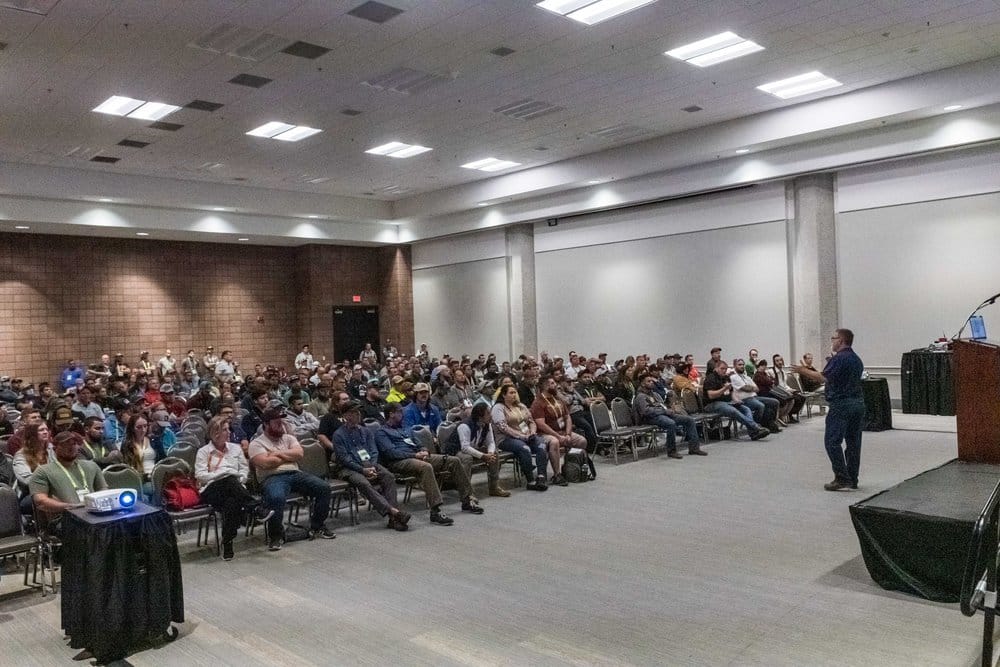
It was back to in-person networking, education, and demonstrations as Hardscape North America welcomed record audiences at this year’s event.
Educational workshops were packed to capacity and tradeshow exhibitors reported productive visits with hardscape and landscape professionals looking to grow their productivity, profit, and market.
When the final numbers are in, we expect to report a highly rewarding event by all measures of success.
The 2021 HNA Awards presentation was also a huge success with an impressive collection of awards presented. See an overview of this year’s award winners here.
2022 will be another game-changing year as HNA event partner, GIE+EXPO rebrands itself as “Equip” with new show management and a new plan to maximize HNA presence already underway. As HNA show owner, ICPI welcomes new show manager, Bob Yoffe, a veteran of concrete industry show management (Northeast Hardscape Expo) to help exhibitors make the most of what is expected to be an even larger HNA crowd.
A new HNA event website is also being developed for launch in January 2022 to make the registration, event participation, and exhibitor service experience more attractive and easier to navigate.
State-of-the-Art Engineering and SRW Solve Site Challenges at Canadian Storage Facility
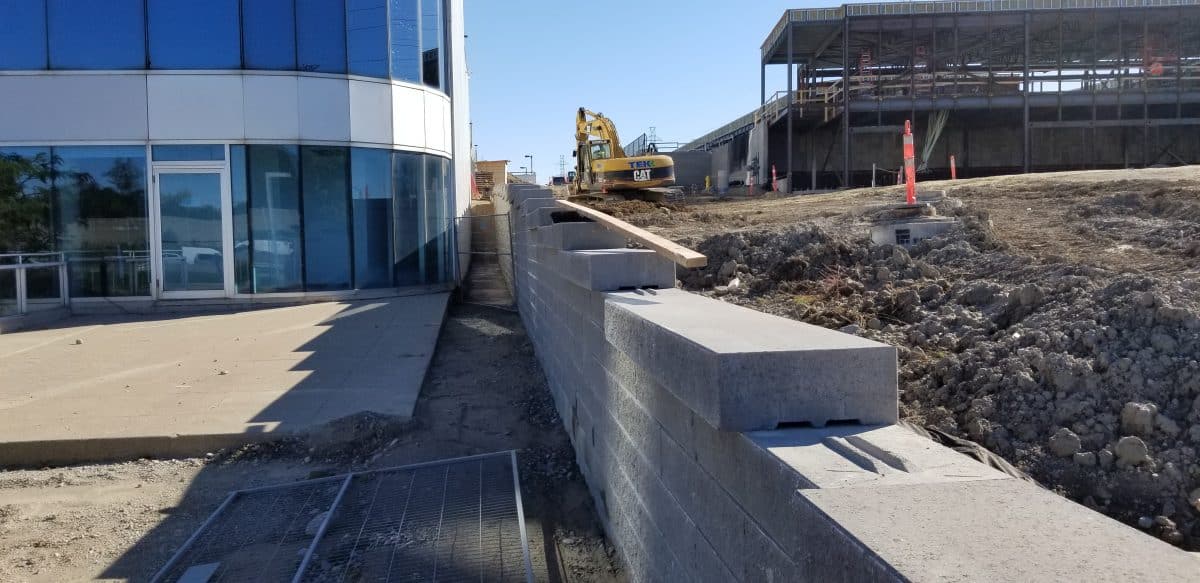
Developers of a Zoom Zoom drive-in storage facility in a suburb of Toronto, Canada, needed a retaining wall in a tight, difficult, location. A segmental retaining wall system, along with state of the art engineering, steel pilings, a gradebeam, and stabilized backfill provided an elegant, cost-effective solution.
The job was a tricky one. The objective was to maintain access to an emergency exit at the base of the highrise next door. The construction zone was very narrow due to the highrise being right on the property line and the presence of utilities under the main access road onto the new site. A deep layer of uncompacted “junk” backfill right under the construction zone complicated the matter further, according to Glenn Herold, P.Eng., M.ASCE, Director Commercial Solutions with CMHA member Oaks Landscape Products, a division of Brampton Brick. In that capacity, he assists customers with a wide range of engineered solutions with segmental retaining walls and concrete pavers.
The owner of the project is Zoom Zoom Storage. Project management was supplied by Net Zero Construction, while Strybos Barron King supplied landscape architecture on the project. The wall itself was designed by A-D Engineering Group Ltd, with installation by TEKK Construction Group Limited.
SRW Wins Out Over Cast-in-Place Retaining Wall
Developers initially examined the idea of digging down to good native soil and constructing a cast-in-place retaining wall. “The cost of that solution was just astronomical. So the design team came in and asked us if there was any other way,” Herold said. “Can we possibly figure out how to build a segmental retaining wall on the site?”
“And I actually had just finished a project up in Northern Ontario, for a waterfront project over sediment deposits where we drove steel pilings into the ground and put a concrete slab on top of that. Then we built the wall above that. So we decided to examine that approach,” Herold said.
The ultimate solution at the Zoom Zoom storage facility involved steel pilings topped with a grade beam — a reinforced concrete slab — along with stabilized backfill behind the segmental retaining wall. “The grade beam actually has to support not just the wall blocks, but also the reinforced zone behind the wall. If the reinforced zone behind the wall isn’t supported, and it starts to settle, and geogrid between the wall blocks and reinforced zone can fail — shear off.”
Stabilized backfill is a relatively new technique in segmental retaining wall construction. It allows segmental retaining walls to be built in areas where they wouldn’t otherwise be possible. The stabilized backfill material is very similar to conventional ready mix concrete. However, the mix contains less water (lower slump) and it doesn’t contain fines/sand, which makes it porous. The backfill material is placed directly behind the wall units at a designated thickness to serve as the drainage layer, and to increase the overall mass of the wall system. Geosynthetic reinforcement can be used to provide a mechanical connection between the wall and the stabilized backfill.
The wall blocks serve as the front “form,” for the pour, while the back of the excavation or removable wooden panels can be used for the back. Being a low slump product, it takes a little more effort than required by standard ready mix concrete to spread, but the material is solid enough to walk on even while placing which helps. Individual concrete pours should be no more than 2’ high to prevent hydrostatic loading on the wall” Herold said.
Large-scale Proprietary Units Get Mechanically Installed
At the Zoom Zoom storage facility, the wall itself was constructed with Oak’s Proterra™ retaining wall system which features a special M-Lock technology, helping ensure a stable structure, even in a true vertical installation. Made of dry-cast concrete on a paver machine, the units are 39.4 inches, or one meter, long, 7.28 inches high and 14.76 inches deep, and are available with both a split and a smooth face.
The combination of the massive units, the steel pilings, the gradebeam, and the stabilized backfill came together to help solve a complex design problem and help ensure that the wall at the Zoom Zoom facility will be standing for years, and years to come.
“The techniques that we used on this project can be helpful in many segmental retaining wall applications. The stabilized backfill, in particular, is something that is not that widely used currently, and not that well understood yet, but it’s catching on for good reason. It makes SRW competitive in some very tricky design situations,” Herold said.
CueCareer Recognizes HardscapingIs and ICPI for Workforce Development Excellence
Cue Career whose mission is to provide students with an easy and effective way to access information about careers and professional development opportunities chose ICPI, now known as CMHA, as the top industry association for 2021. Cue Career showcases careers in healthcare, manufacturing, construction, education and others to high school students exploring opportunities for their future. ICPI was recognized with the Patty Alper Family Foundation award.

2021 HNA Awards Winners and Honorable Mention Recipients Announced
Presenting the 2021 Hardscape North America Awards
CHANTILLY, VA – Contractors, producers, and designers claimed top honors at the 2021 Hardscape North America Awards Recognition Presentation on October 21 at the Kentucky Exposition Center. Each year, the HNA Awards recognize exceptional residential and commercial hardscape projects including walkways patios, pool decks, outdoor living kitchens and spaces, and driveways as well as commercial plazas and streets. Hardscape crews received recognition from industry experts for excellence in project design, quality, compatibility, and construction.
The number of entries received from across North America continues to grow. In 2021, a record 178 projects were submitted across 18 hardscape categories, including concrete paver, clay brick, segmental retaining walls, porcelain, natural stone, vintage installation, outdoor living features, and a combination of hardscape products.
“The HNA Awards is a well-earned tribute to work that is elevating the hardscape industry in many ways. Being recognized are projects that are the result of exceptional teams delivering creative solutions, quality products and reliable installations.” – Dr. Marshall Brown, ICPI Chair.
The HNA Awards are produced by the Interlocking Concrete Pavement Institute (ICPI) and endorsed by the Brick Industry Association (BIA) and National Concrete Masonry Association (NCMA). The 2021 awards program was sponsored by Belgard, FX Luminaire, iQ Power Tools, Keystone Hardscapes, and LATUX.
HNA Awards organizers and judges are pleased to recognize the 2021 awards recipients. Project images are available at: https://flic.kr/s/aHsmX1gLHi
2021 HNA Awards Recipients:
Clay Brick Category
Clay Brick – Residential
Winner – Woodside
Contractor: Exterior Pavers Designs, Inc.
Producer: Basalite
Owner: Marino
Project location: Woodside, CA
Honorable mention – Sandhills in Shaker
Contractor: Anchor Landscaping
Producer: The Belden Brick Company
Designer: Anchor Landscaping
Owner: NA
Project location: Shaker Heights, OH
Clay Brick – Commercial
Winner – Canton Centennial Plaza
Contractor: Enviroscapes
Producer: The Belden Brick Company
Designer: MKSK
Owner: The City of Canton
Project location: Canton, OH
Honorable mention – Patten Square
Contractor: Fischer Brothers LLC
Producer: The Belden Brick Company
Designer: WMWA Landscape Architects
Owner: City of Chattanooga
Project location: Chattanooga, TN
Concrete Paver Category
Concrete Paver – Residential (size less than 3,000 sf)
Winner – Rustic Cottage Outdoor Living
Contractor: GoldGlo Landscapes
Producer: Unilock
Designer: GoldGlo Landscapes
Owner: Residential owner
Project location: Millersburg, PA
Honorable mention – Girvan Pool Project
Contractor: Calvin Landscape LLC
Producer: Techo-Bloc
Designer: Daniel Camacho/Jeremy Burns
Owner: Residential owner
Project location: Zionsville, IN
Concrete Paver – Residential (size more than 3,000 sf)
Winner – Lewin Residence
Contractor: Hollywood Stone
Producer: Belgard
Designer: Landmark Custom Homes
Owner: Lewin Brothers
Project location: South West Ranches, FL
Honorable mention – Patterson
Contractor: Dorantes Landscaping
Producer: Calstone
Designer: Bill Patterson
Owner: Bill Patterson
Project location: Carmel, CA
Concrete Paver – Commercial (size less than 15,000 sf)
Winner – Buddhist Temple
Contractor: Majestic Outdoors
Producer: Belgard
Designer: Majestic Outdoors
Owner: Temple Venable
Project location: Cary, NC
Honorable mention – Marriott Citrine and AC Hotel Palo Alto
Contractor: Mr. Pavers
Producer: Calstone
Designer: James Winstead
Owner: Marriott International, Inc.
Project location: Palo Alto, CA
Concrete Paver – Commercial (size more than 15,000 sf)
Winner – Alton Town Center
Contractor: Precise Paving, Inc.
Producer: Belgard
Designer: Nick Mihelich
Owner: Joe Ragonese
Project location: Palm Beach Gardens, FL
Honorable mention – MAPS 3 Scissortail Park
Contractor: Ruppert Landscape
Producer: Keystone Hardscapes
Designer: NA
Owner: Oklahoma City
Project location: Oklahoma City, OK
Concrete Paver – Permeable
Winner – Palm Beach Zoo
Contractor: Precise Paving, Inc.
Producer: Belgard
Designer: Borrero Architecture
Owner: Palm Beach Zoo
Project location: West Palm Beach, FL
Honorable mention – LeConte Mountain Range
Contractor: Hickory Hardscapes
Producer: Belgard
Designer: NA
Owner: City of Pigeon Forge, TN
Project location: Pigeon Forge, TN
Segmental Retaining Walls Category
Segmental Retaining Walls – Residential
Winner – Maiden Lake Road Residence
Contractor: JJ’s Cutting Edge LLC
Producer: County Materials Corporation
Designer: JJ’s Cutting Edge LLC
Owner: Residential owner
Project location: Lakewood, WI
Honorable mention – Next-Level Retreat
Contractor: Property Pros Land Management, LLC
Producer: Belgard
Designer: Tracy Cox
Owner: Residential owner
Project location: Indianapolis, IN
Segmental Retaining Walls – Commercial
Winner – The Oaks at Portola Hills
Contractor: Geogrid Retaining Walls Systems, Inc.
Producer: Belgard
Designer: Matthew M. Merritt
Owner: Baldwin & Sons
Project location: Lake Forest, CA
Honorable mention – Foot Works Dance
Contractor: Banner Retaining Walls
Producer: Keystone Hardscapes
Designer: NA
Owner: Foot Works Dance
Project location: Benbrook, TX
Combination of Hardscape Products Category
Combination of Hardscape Products – Residential (size less than 4,000 sf)
Winner – Symmetrical Natural Poolscape
Contractor: Monello Landscape Industries
Producer: Techo-Bloc
Designer: Joe Monello/Jarret Bernard
Owner: Residential owner
Project location: Boonton, NJ
Honorable mention – Freeland Residence
Contractor: Lehnhoff’s Landscaping, LLC
Producer: Natural Stone
Designer: NA
Owner: Residential owner
Project location: Freeland, MD
Combination of Hardscape Products – Residential (size more than 4,000 sf)
Winner – Lodge Living
Contractor: Monello Landscape Industries
Producer: Techo-Bloc
Designer: Joe Monello
Owner: Residential owner
Project location: Wayne, NJ
Honorable mention – Custom Reno Residence
Contractor: Sierra Flatworks
Producer: Belgard
Designer: Sierra Flatworks
Owner: Residential owner
Project location: Reno, NV
Combination of Hardscape Products – Commercial
Winner – Wallis & Baker
Contractor: PavePro
Producer: Keystone Hardscapes/Ragland Clay Pavers
Designer: SMR Landscape
Owner: Billingsley
Project location: Grapevine, TX
Honorable mention – Simon Fraser University Campus Renovation
Contractor: Apex Granite & Tile
Producer: ROMEX
Designer: Public Architecture
Owner: Simon Fraser University
Project location: Burnaby, BC
Porcelain Paver Category
Porcelain – Residential
Winner – Jupiter Island Home
Contractor: Magnificent Hardscapes
Producer: Mirage/Belgard
Designer: Paul Catania
Owner: Residential owner
Project location: Jupiter, FL
Honorable mention – 156 Spyglass Lane
Contractor: Magnificent Hardscapes
Producer: Mirage/Belgard
Designer: NA
Owner: Residential owner
Project location: Jupiter, FL
Porcelain – Commercial
Winner – Gotham 1&3
Contractor: Blondies Treehouse Inc
Producer: Mirage/Belgard
Designer: HM White Landscape Architects
Owner: Gotham 1&3
Project location: Long Island City, NY
Honorable mention – Inlet Shore – Westshore Marina District
Contractor: Standard Brick Pavers
Producer: Mirage/Belgard
Designer: Ardurra
Owner: WCI Communities, a Lennar Company
Project location: Tampa, FL
Naural Stone Category
Natural Stone
Winner – Patio Bliss
Contractor: Premier Outdoor Environments, Inc.
Producer: Buechel Stone/Unilock
Designer: Kevin Barnes/Nathan Filip
Owner: Residential owner
Project location: Elmhurst, IL
Honorable mention – JB Farm
Contractor: Metrolina Landscape
Producer: Quarry & Klin
Designer: Metrolina Landscape
Owner: Residential owner
Project location: Lincolnton, NC
Outdoor Living Features Category
Outdoor Living Features
Winner – Modern Mountain Resort
Contractor: GoldGlo Landscapes
Producer: Natural Stone Quarries
Designer: GoldGlo Landscapes
Owner: Residential owner
Project location: Millersburg, PA
Honorable mention – Twin Rooftop Outdoor Living Courtyards
Contractor: Monello Landscape Industries
Producer: Cambridge Pavers
Designer: Joe Monello/Jarret Bernard
Owner: Metro
Project location: Bloomfield, NJ
Vintage Installation Category
Vintage Installation
Winner – The Plaza at Kenan Hall
Contractor: Paverscape Inc
Producer: Pine Hall Brick Company
Designer: Sharon K. Hauber, PLA, ASLA
Owner: Flagler College
Project location: St. Augustine, FL

Mississippi State University Takes First Place in National Unit Design Competition During NCMA’s Midyear Event
Two college teams presented their unique, fresh concrete masonry unit (CMU) designs at the 2021 Unit Design Competition (UDC) during NCMA’s Midyear event at the Pfister Hotel in Milwaukee, Wisconsin. Judges reviewed and scored the designs prior to the event and the results were announced during the meeting. The team from Mississippi State University took the top prize over second place Iowa State.
“It is always good to see new ideas and young minds looking into the future and making our world a better place to live,” said Kevin Mueggenborg, Dolese Brothers, Production Technologist and UDC Judge. “This is a great competition and I learn something every year”
The team of Jenny Hutton, Sarah Mixon, Gabbi Morelli, and Skylar Sloan, all students at Mississippi State University under the tutelage of Professor Jacob Gines, took first place. The team’s design, dubbed “Ellipse”, wowed the audience with its innovation. The jury loved the hands-on prototyping of the units, which provided not just great visuals, but real world, practical engagement for the students.

In a search for innovative ways to combine curves and deep reliefs within the rectilinear form of a unit, the design of Ellipse was developed. Having incorporated ellipsoid voids that reach halfway through the overall width of the unit, the design benefits from the deep shadows and arcs without compromising the stability and structural integrity of a traditional unit. The face of this design included rounded rather than sharp edges, not only aiding to the aesthetic flow, but also creating a more chip-resistant material by eliminating corners that may be damaged in transport.
The team created the form through the combination of a simple rectangle and ellipse both with the same base dimensions, 3⅝ʺ x 3⅝ʺ x 15⅝ʺ. The team then used the ellipsoid shape produced to subtract two of the corners from the basic monarch brick form. The voids have dimensions equal to one half of the length, width, and height, allowing the brick to have enough depth to create significant shadows while leaving the brick thick enough to be structurally sound.
The team from Iowa State University in Ames, Iowa, claimed second place in the competition. The team consisted of Aaron Howe, Jorge Nunez and Devin Palmberg under the guidance of Professor Bosuk Hur. They presented their design, “The CMU Green Block” and highlighted their applied skills.

The Iowa State team noticed a problem in urban communities where modern highway sound barriers are drastically underachieving. This is caused by concrete being an economically viable option for these sound barriers while the current design does not optimize the sound dampening qualities. The team’s goal with The Green Block was to take an economically efficient material in concrete and combine it with practically efficient methods of absorption and diffusion. Through the use of a curved extension from the block, sound is diffused into various directions. They also incorporated a green wall which uses sound absorbing properties of both the vegetation and the substrate. These elements provide a more efficient wall system both practically and economically.

“It always amazes me how the next generation of designers can re-envision the conventional while concurrently educating and provoking thought in those more seasoned,” expressed Jason Thompson, NCMA, VP of Engineering and UDC Judge.

Pete Hoyt Bestowed With NCMA Lifetime Achievement Award
Peter B. Hoyt from Atlanta, GA, and retiree from Oldcastle Architectural, Inc., was presented with NCMA’s Lifetime Achievement Award on August 5 at the association’s Midyear meeting held at The Pfister Hotel in Milwaukee, WI.
This award is NCMA’s highest recognition for achievement or service by individuals through a member company (or companies). The award recognizes those individuals who have made extraordinary contributions to directly advance the industry and/or the association in a profound and lasting manner.
Hoyt and his two siblings grew up in the Westover neighborhood of Arlington, VA. His dad worked as a Naval architect at the nearby shipyards. Hoyt met his wife, Diane, in high school while living in Westover. They didn’t start dating until their fourth year of college. When Diane was at East Carolina University, Pete was studying business at The University of Virginia. He was also working his way through school as a platoon leader, as part of UVA’s Army ROTC. To this day, he credits the army as providing great management training. Hoyt was stationed at the Army’s Aberdeen Proving Ground, but traveled up and down the east coast for various training programs. After two years in active service, he applied for and received early release to pursue a law degree at George Washington University. Despite working full-time and taking most of his classes at night, it took him only three years to complete law school.
It was 1966 when Hoyt joined the firm of Touche Ross and Company, where he served in their tax division working on behalf of some of the biggest companies in the U.S. It was Diane’s father, Stanley Burroughs, that first exposed him to the concrete block business. Eventually, discussions came around to joining the family business. He finally decided to make the leap in 1971 and quickly found his footing with the company. Needing extra capacity for the growing business, they added a new plant in Bethesda and bought Washington Concrete Products in 1983. Hoyt credits his two partners, Kathy Wack and Harry Newman, for much of Betco and his success. Harry pushed for diversifying the business beyond traditional gray units and into patio block, installing a machine in the only place they had room– under a set of stairs. With their new machine, Betco supplied concrete pavers to Hechingers, a regional home improvement chain. Building on that success, Betco pursued similar retailers outside of the Washington Metro area, securing an appointment with a then new company called Lowe’s in North Carolina. A relationship with rival Home Depot soon followed.
By the early nineties, Betco outgrew their ever urbanizing location in Bethesda. Hoyt secured 12 acres in Gainesville, Virginia, for a site which would eventually host three manufacturing machines. Having confidence in himself and the business model his team created, he sought opportunities to take his experience to the national stage. Oldcastle, a quickly expanding company, intrigued him and he valued an opportunity to work with longtime company chairman, Joe McCullough. He and Joe structured a business acquisition plan that kept his team in place and tapped Hoyt to serve as president of Oldcastle’s Eastern region. Hoyt said he appreciated Oldcastle’s philosophy to buy only successful companies and infuse them with capital and best practices, retaining leaders who made those companies successful when possible. He also credits his professional success with his early involvement in the NCMA.
Most every idea, whether it be with production technology or product or market, has come from networking within NCMA. He translated his lifetime love of tennis into a new way of networking at NCMA meetings.
In 1998, he was elected NCMA Chairman of the Board and drew upon his business experience to tackle serious industry issues. After working hard to support the creation of the NCMA Education and Research Foundation, he’s the only individual to continuously serve in a direct leadership capacity since the foundation’s inception. Hoyt was inducted into NCMA’s Hall of Fame in 2001, and presented with the NCMA Chairman’s Award in 2018.
A few of the accolades and congratulations received for Hoyt are below.
“There’s been a lot of changes in our industry since 40 years ago when we first met. We’ve become good friends in those 40 years and had some interesting experiences. Congratulations on your award.” – James Weber, retiree of Oldcastle Architectural, Inc. and NCMA 2006 Chair
“We know how much of a blessing you’ve been to NCMA and to our industry and we are just thankful for all you’ve done for us. And you’re very deserving of this award.” – Harry Horn, retiree of Devening Block, Inc. and NCMA 1990 Chair.
“I know NCMA and its members occupy a special place in your heart. And this is a very meaningful and well-deserved honor.” – Patricia Pick, VWG Wealth Management
At 56 years and counting, Pete and Diane consider themselves blessed with an amazing family consisting of three children and nine grandchildren. When he’s not playing tennis or pickleball, concrete masonry and the industry continues to be at the forefront of Pete’s thoughts, even when traveling.
NCMA is proud to bestow the Lifetime Achievement Award to Pete Hoyt for all his contributions and his years of exemplary service to NCMA and the industry.
